A Book Critic Abroad
Bookstores, castles, and the serendipity of literary travel.

Maybe every vacation should start with a little disappointment — like rain at a wedding.
After a seven-hour flight from D.C., we arrived in Lisbon on Sunday morning, whisked through customs, and took the Metro to an apartment building in the city’s historic center.
But our entry code was wrong. And so was the second one we were sent. For 90 minutes we wilted in a dark, airless hallway until a third code finally let us in. We ran, somewhat ungraciously, to the bathroom and — only after the deed, dear readers — discovered that the apartment had no running water.
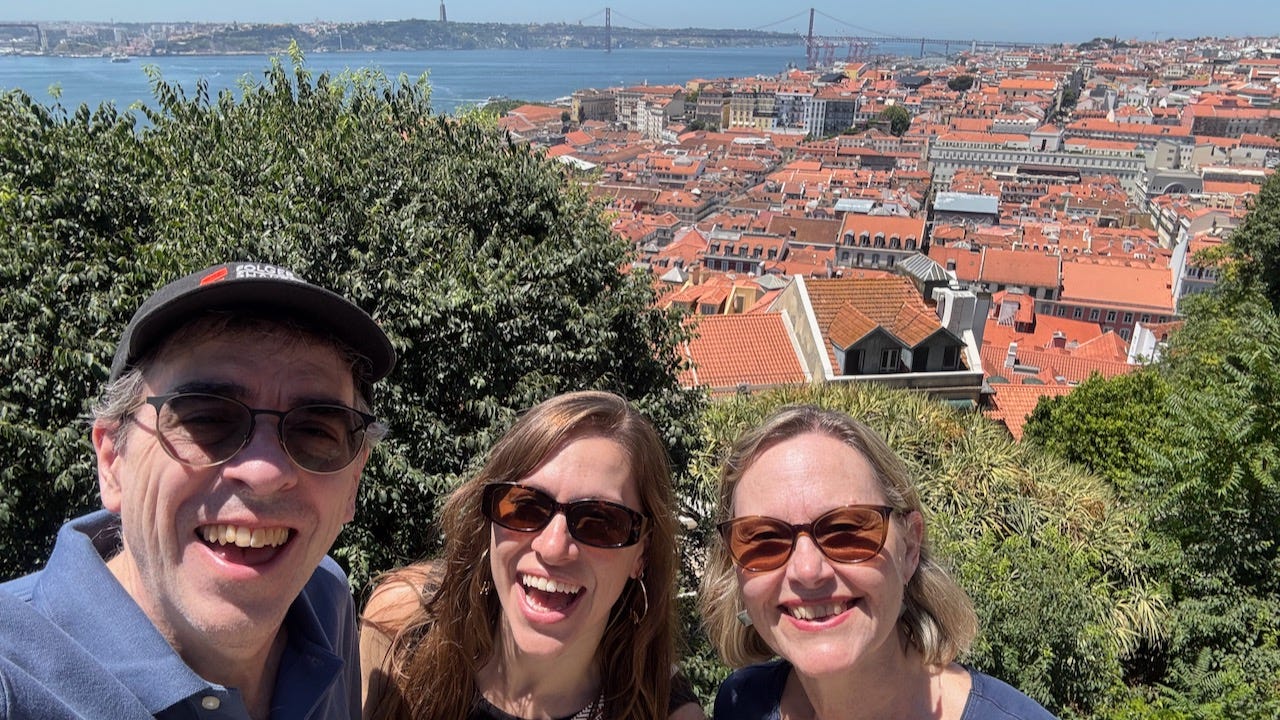
With no hope of repair on the horizon, we booked a second Airbnb, where our new host, the lifesaving Pedro, welcomed us up four narrow flights of stairs — watch your head! — to his apartment, from which, on tiptoes, we could see São Jorge Castle.
The next day, we set out on foot for that very castle, which is guarded by shrieking peacocks and provides spectacular views of this gorgeous city.
We walked 24,000 steps, and somehow 23,000 of them were uphill. Lisbon, we’ve discovered, is basically an antique StairMaster tiled blue.
I still have the upper body of Mr. Burns, but I’m starting to develop the thighs of Hercules. (Though the ubiquitous pastéis de nata are not helping.)
In Lisbon, even the tiniest alleys, dank passageways that Americans would abandon to dumpsters and raccoons, hide tiny restaurants where mournful waiters serve bacalhau, dourada, and robalo.
Naturally, our first literary treat was a visit to Livraria Bertrand, the oldest continuously operating bookstore in the world. Founded nearly half a century before the Declaration of Independence, the business survived the 1755 earthquake and eventually relocated to its present location.
Livraria Bertrand is now a train of linked rooms, each named after a different Portuguese author — José Saramago, Eça de Queirós, etc.
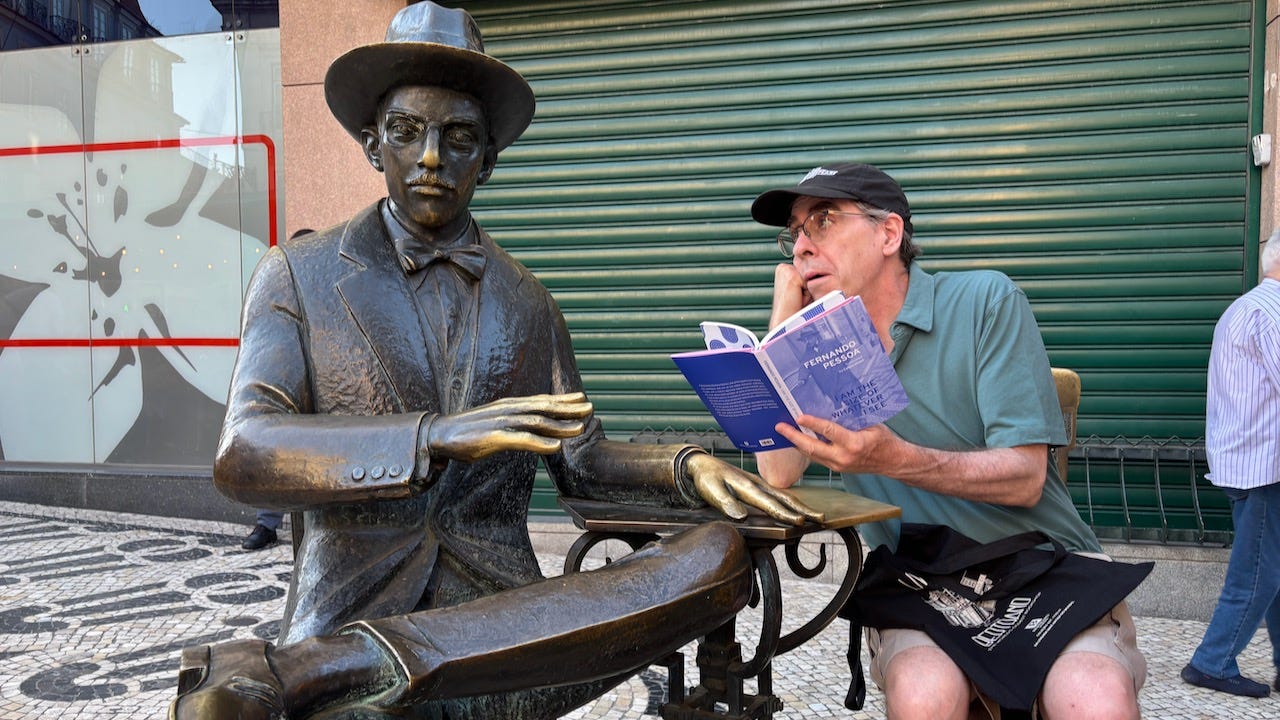
As I lingered, a clerk explained, in English, the oeuvre of Lisbon’s beloved poet Fernando Pessoa, who wrote in more than 70 distinct personalities that he called heteronyms, each with their own biography and style.
I bought a beautifully designed anthology of Pessoa’s poetry, I Am the Size of Whatever I See, translated by Calvin Olsen, and a tote bag, which I need like Pessoa needs another heteronym. (The poet, who died in 1935, is still holding the No. 1 spot on the store’s fiction bestseller list.)
In the last room, we found Café Bertrand, opened in 2017 to celebrate the bookstore’s 285th anniversary. There we enjoyed a slice of torta de laranja under the watchful gaze of a whimsical mural of Pessoa.
On Tuesday, we toured Jerónimos Monastery, founded in 1501 for the Order of St. Jerome, the patron saint of translators — and, unofficially, just about everybody who loves books.
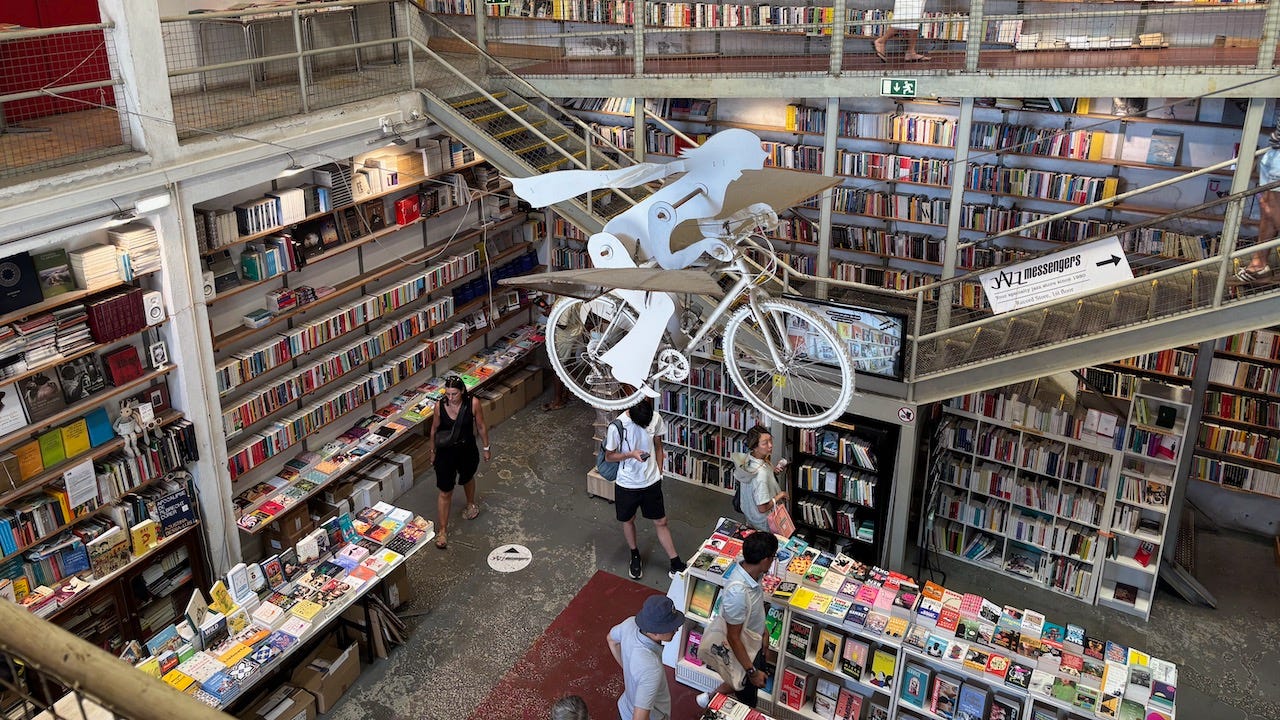
Which clearly includes the Portuguese. Lisbon has a number of wonderful bookstores, like Ler Devagar (“Read Slowly”) at the LX Factory marketplace. Vast machinery still looms over patrons from the second-floor balcony, a reminder of the building’s previous incarnation as a printing plant. The temperature inside was only a few degrees cooler than the withering 100-degree heat outside, which enhanced the old factory vibe.
As we checked out, a clerk illustrated a paper bag for my daughter’s purchases. (Children’s book publishers: Track this guy down.)
Wednesday, we got up early and headed to Sintra. Lord Byron wasn’t exaggerating when he wrote in Childe Harold’s Pilgrimage:
Lo! Cintra’s glorious Eden intervenes
In variegated maze of mount and glen.
Byron — “mad, bad, and dangerous to know” — put Sintra on the map for British Romantics. At Lawrence’s Hotel, a flight of stairs that the 21-year-old poet descended to pursue, one must presume, some unspeakable abomination, is still memorialized with a lovely tile plaque.
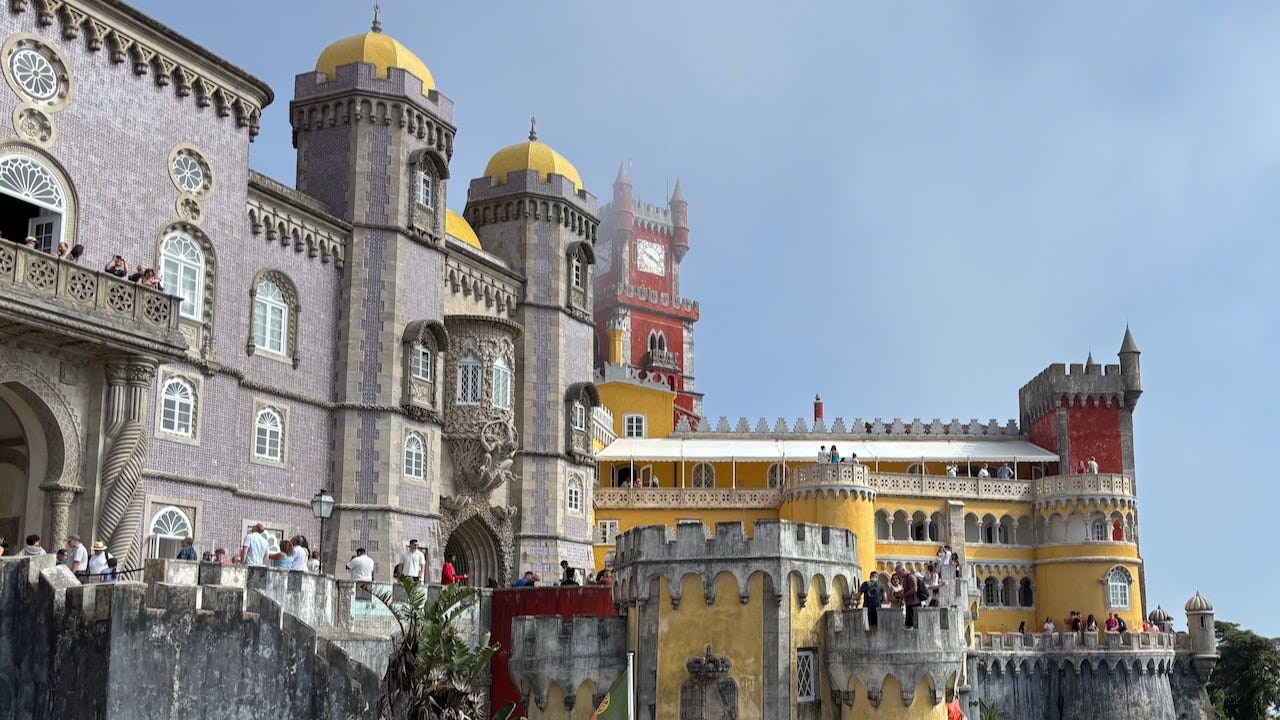
What’s most remarkable is that Byron praised Sintra in 1812, decades before Ferdinand II transformed the ruins of a 16th-century monastery into the fantastical Pena Palace, a fairy tale in stone that’s missing nothing except an imperiled princess and a fire-snorting dragon.
Today we’re heading off to Coimbra and Porto for more adventures. I confess to feeling conflicted about missing America’s 250th birthday, which is also my own, though I’m somewhat younger.
A tour this week of the Aljube Museum of Resistance and Freedom, which is dedicated to the work of victims, activists, and writers who fought back against Portugal’s 20th-century fascist dictatorship, makes me realize again how precious — and fragile — liberty is.◆
The rest of the newsletter follows below:
Books Go to the Movies
Mary Oliver: Saved by the Beauty of the World opens in select theaters today and comes to PBS on Aug. 25. Sasha Waters’s documentary explores how this famously private writer became one of America’s most popular poets. Created in consultation with biographer Lindsay Whalen, the film features never-before-seen photos and correspondence, along with readings and reflections with John Waters, Stephen Colbert, Oprah Winfrey and others.
Silo returns to Apple TV today for its third season (trailer). Based on Hugh Howey’s bestselling Silo trilogy — which began as the self-published novella Wool — the show follows the remnants of humanity living in a cavernous underground bunker. This season promises to reveal what originally drove people beneath the ground. (The series has already been renewed for its fourth and final season.)
A special 85th-anniversary re-release of Citizen Kane begins on Sunday in select theaters (trailer). Orson Welles’s classic film about the rise and fall of a newspaper tycoon isn’t based on a book, but it’s inspired a library full of them, including Warren Buckland’s Who Wrote Citizen Kane?◆

Kristy’s Great Idea
This year marks the 40th anniversary of The Baby-Sitters Club books, which have sold nearly 200 million copies. At this point, the series and its related spin-offs, adaptations, and merchandise have earned enough to keep Kristy in pin money until the sun burns out.
But those industrious middle-school girls aren’t done — not by a long shot.
Next week, Scholastic will publish The Baby-Sitters Club Fan Edition: Baby-Sitter Summer.
The original series creator, Ann M. Martin, has enlisted a half-dozen children’s, YA, and adult authors to create a new book for kids that may also serve as the ultimate Gen X nostalgia pajama party. Emma Straub, Becky Albertalli and four others each write from the point of view of different BSC members.
According to publishing lore, back when Dionne Warwick was singing “That’s What Friends Are For” and phones were attached to the wall, The Baby-Sitters Club was conceived as a collection of four books. Let’s just say Kristy’s Great Idea was greater than anybody could have imagined. Now there are more than 250 titles in 23 languages around the world.
And the original entrepreneurs of Stoneybrook are old enough to take their grandkids to The Baby-Sitters Club Musical, currently in development.◆
A Revolutionary Revision
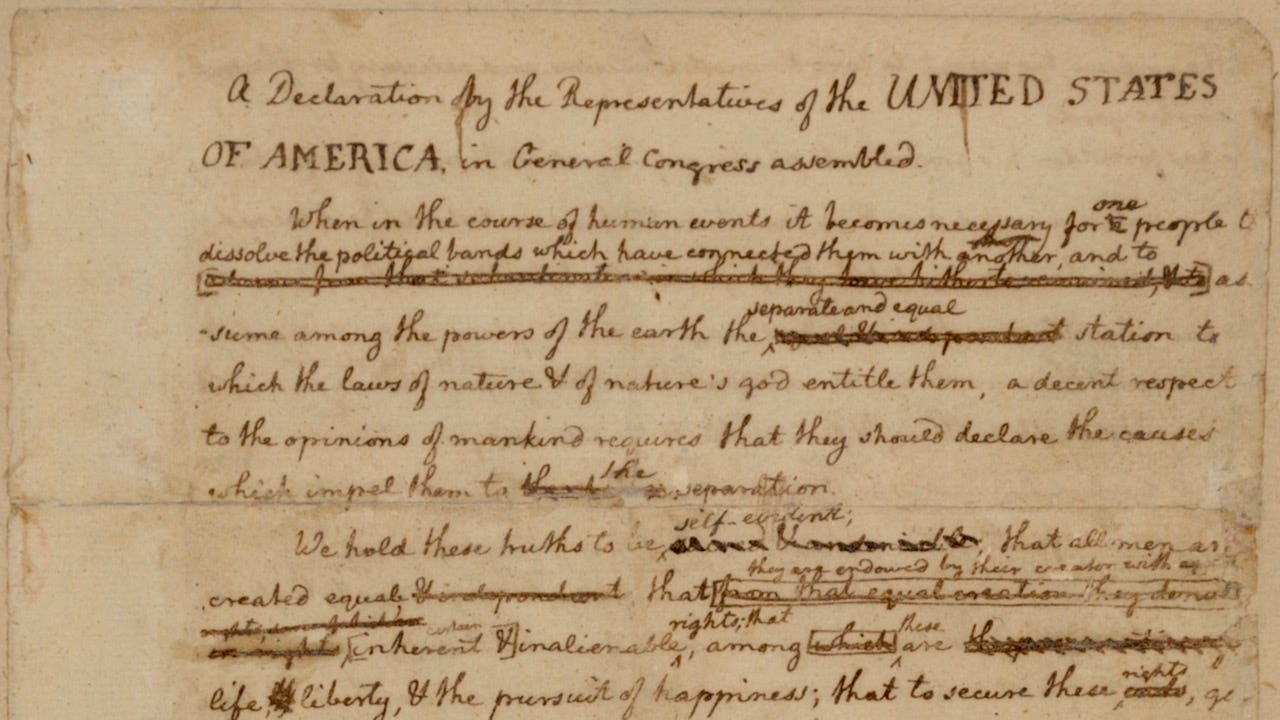
While Thomas Jefferson was drafting the Declaration of Independence in June 1776, he made a small but history-shattering change.
In a passage about grievances against King George III, Jefferson rubbed out the word “subjects” and wrote in “citizens.”
That particular sentence didn’t make it into the final document, but philosophically, this was the edit heard round the world.
Jefferson’s original rough draft of the Declaration of Independence, which also shows changes by John Adams and Benjamin Franklin, sits at the heart of a new exhibit opening today at the Library of Congress.
“The Declaration’s Promise: A Revolutionary Idea,” commemorating America’s Semiquincentennial, contains more than 120 items from the Library’s collection to highlight the principles of the Declaration and their influence.
Among the items on display are a 1690 edition of John Locke’s Two Treatises of Government, which had a profound influence on the Founding Fathers, and the first newspaper printing of the Declaration of Independence.
Treasures from the 19th century include Frederick Douglass’s 1852 speech “What to the Slave Is the Fourth of July?”; a first edition of Walt Whitman’s Leaves of Grass; Abraham Lincoln’s handwritten Gettysburg Address; and ambrotypes — glass-plate images — of Civil War soldiers.
You can see the Declaration of Rights of the Women of the United States that Susan B. Anthony read after suffragists interrupted the centennial celebration at Independence Hall in Philadelphia on July 4, 1876.
The exhibit also celebrates newfound freedom in the arts, from jazz to musical theater, including sheet music from Lin-Manuel Miranda’s Hamilton.
Even Kermit the Frog — doing his best imitation of Jefferson — makes an appearance.
This free exhibit runs through July 2027, so there’s no rush, but you’ll need to reserve timed tickets here.
P.S. For a revolutionary look at America’s founding document, check out Tyrants and Rogues: Understanding the Declaration of Independence. In this engaging book, historian Robert G. Parkinson asks us to stop swooning over Jefferson’s idealistic introduction and concentrate instead on the 27 grievances against King George and his officers. Far from being a litany of antique complaints irrelevant to our contemporary lives, Parkinson argues that those indictments contain the values, anxieties, and contradictions of the first Americans that still resonate with us today, from disputes over judicial independence and civilian control of the military to immigration policy, citizenship, and executive power.
“These are twenty-first-century problems,” he writes, “as much as they were eighteenth-century ones.”◆
Picture This
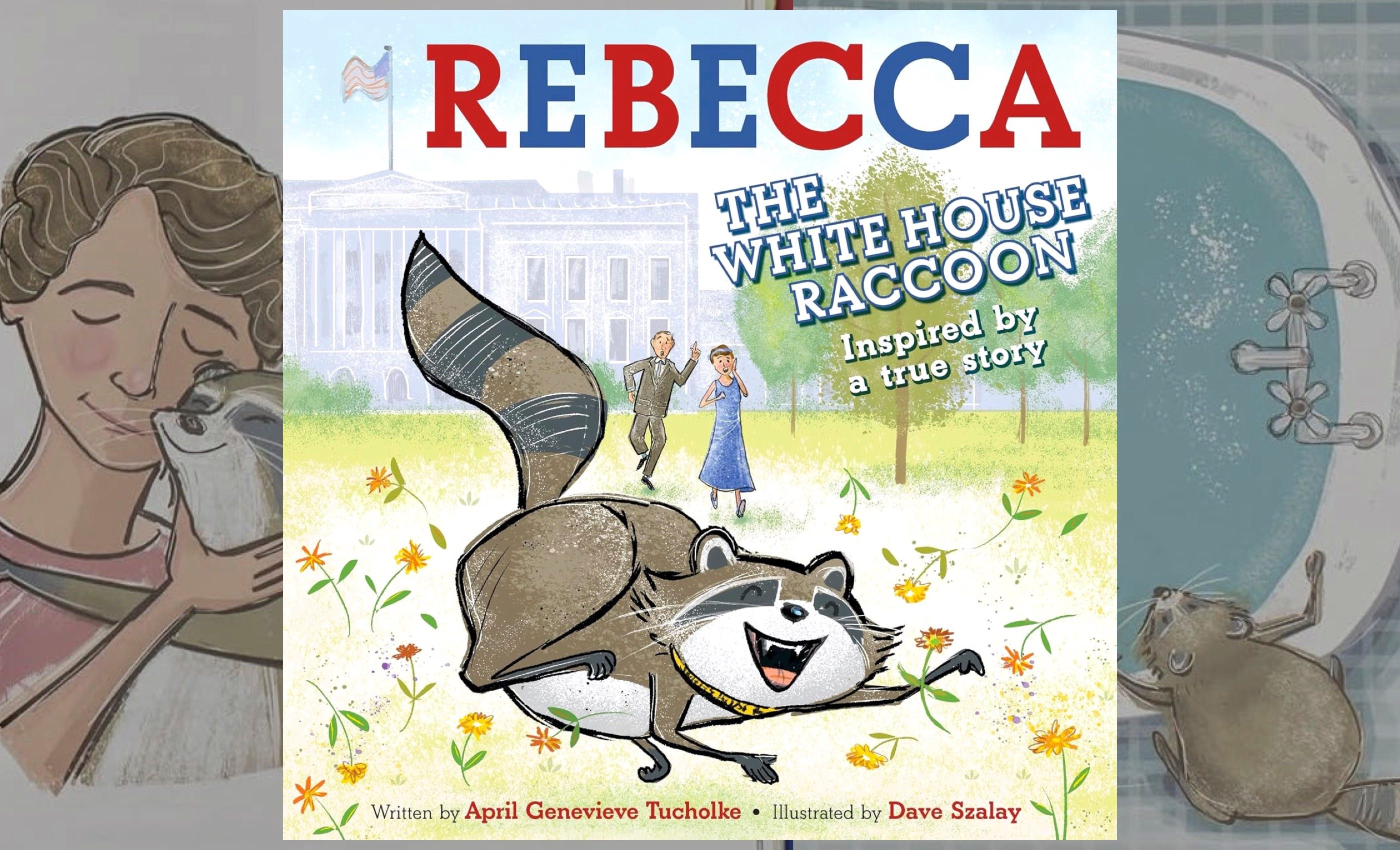
“Last night I dreamt I went to Manderley again” — or, in the case of this Rebecca, to the White House.
April Genevieve Tucholke has written a book for the littlest readers about a truly zany chapter of presidential history.
In 1926, someone sent President Coolidge a live raccoon for Thanksgiving dinner. But instead of eating it, the president and his wife, Grace, named it Rebecca and gave it free rein. (The pests in the White House were cuter back then.)
It sounds mad, but Rebecca became something of a national celebrity.
Dave Szalay’s wonderfully chaotic illustrations show the raccoon competing for Grace’s affections with her many other pets — including a bear and two lion cubs!
Meanwhile, Rebecca clears off the White House dining room table, cleans up in the First Lady’s bathtub, and generally causes mayhem for the panicked staff.
“Everyone loved me,” Rebecca claims. “You would have loved me too.”
This seems like a horrible lesson about adopting wild animals, but a hilarious one about U.S. history.
A brief note at the end explains that Rebecca was eventually transferred to what is now the National Zoo.◆
This Week’s Poem
Weeks ago, when I first started thinking about sending this newsletter from Lisbon, I realized I didn’t know any Portuguese poets except Fernando Pessoa.
I needed a crash course in the nation’s verse.
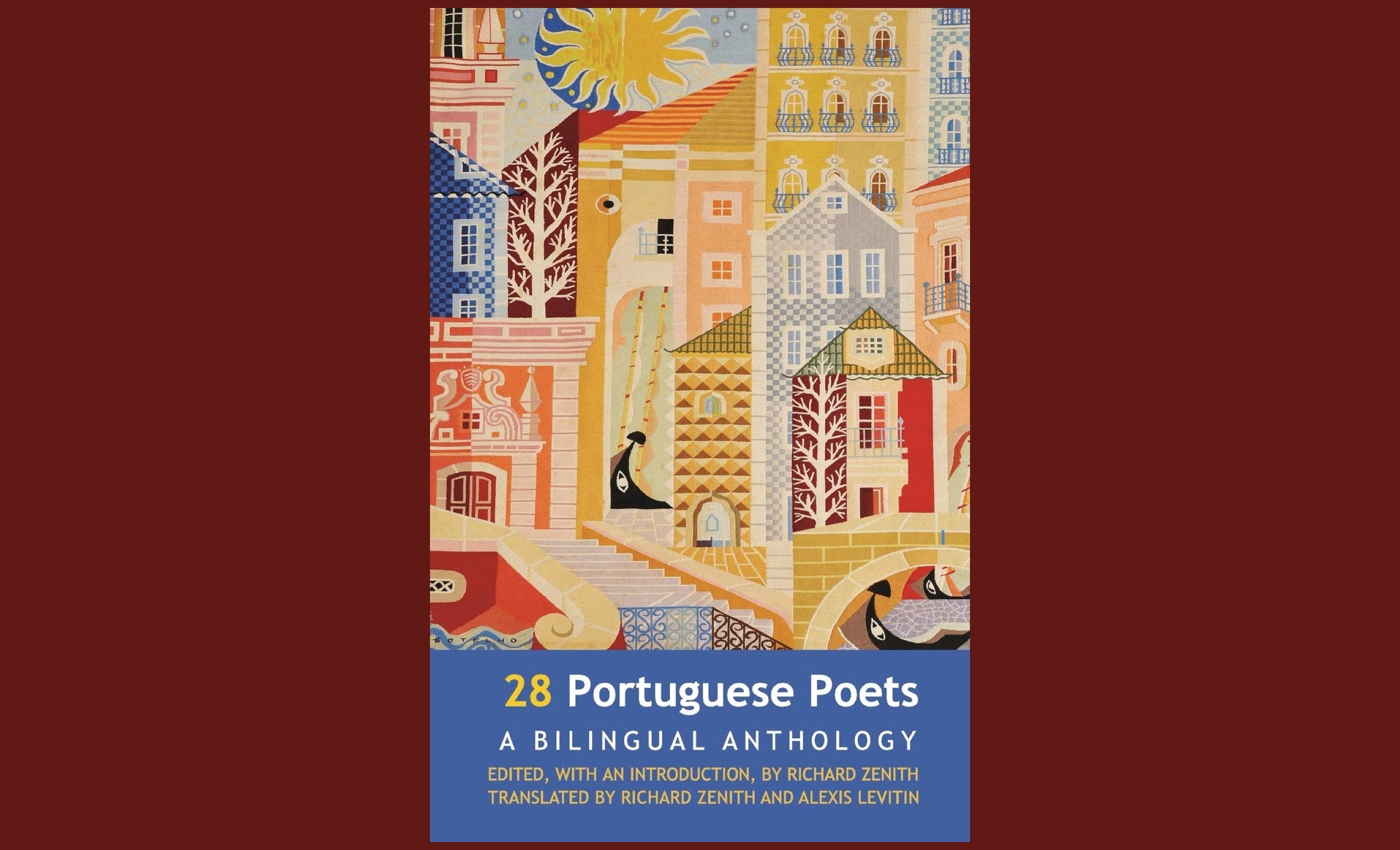
28 Portuguese Poets, edited by translator and Pessoa scholar Richard Zenith, gave me a terrific introduction.
While apologizing for the inevitably “skimpy” selections possible in a single volume, Zenith provides a great service to interested but uninitiated readers like me.
“Portuguese poetry throughout the 20th century and into the 21st,” he writes, “has been a dynamic, wide-open territory, whose inhabitants have spoken with candour and been restlessly inventive, using language to embody their different sexualities, political and cultural preoccupations, amorous passions, religious passions, and in some cases just their yearning for solitude, or the pioneer’s yen to pick up and move on, without really knowing to what end.”
The following poem is by Ruy Belo (1933–1978), one of Portugal’s most beloved modern poets. His statue stands in Poets’ Park in Oeiras, near Lisbon.
Pilgrim and Guest on Planet Earth
My only country is where I feel at home
it’s where I pay for that feeling with suffering
it’s where in an instant I have everything
Right now my country is the same green fields
which looked sad and forlorn to me in autumn
and where I never need to show a passport
since that’s where I was born and at each moment die
peace not being a word that applies to me
The daisy the grass the peach tree in flower
guarantee the minimum of necessary pain
for a man who would look upon any happiness
as a pension check or an insult
Life begins anew the sun is shining
and this is called spring
but it’s far too varied and concrete
to fit into just one abstract word
My country is all the friends
I keep making and losing
My friends are the most recent ones
those from other countries those I hardly know and
I have to leave them because I’m going away
since I’m never at home where I am
I’m not even here where I am
I’m not very big I was born in a village
and my country that was small to begin with
became even smaller for me
owing to the landowners and people-owners
and the hawkers of souls in the temple of the world
I’m me where I am and I’m only portuguese
for having first seen light in portugal
“Pilgrim and Guest on Planet Earth,” by Ruy Belo, translated by Richard Zenith and Alexis Levitin. Excerpted from “28 Portuguese Poets: A Bilingual Anthology,” edited by Richard Zenith. Published by Dedalus Press, 2015. Reprinted with permission.
P.S. Since coming to Lisbon, I’ve found several anthologies of Portuguese poetry, including Lisbon Poets, a bilingual edition from Shantarin, translated by Martin D’Evelin and Martin Earl, with witty illustrations by André Carrilho.◆
Clippings
This week’s review is Country People, Daniel Mason’s delightful novel about a hopelessly distracted scholar searching for wonder in Russian folktales and the hills of Vermont (review).
If you woke up this morning feeling like a giant bug, happy Kafka’s birthday! The master of existential dread was born on this day in 1883 in Prague. If you know a young reader who might resonate with Kafkaesque stories about the inexplicable absurdity of life, introduce them to Gary Clement’s graphic novel series, K Is in Trouble.
Lisbon is crawling with writers this week. The annual DISQUIET International Literary Program, sponsored by Dzanc Books, has brought American authors to the city, where they’re joining Portuguese colleagues for workshops and readings through July 10.
Note: I’m taking next week off. No Tuesday review, no Friday newsletter, no email.
By Order of Dawn.◆
You made my day. Happy Birthday Ron. You are delightful
I’d watch a PBS show that combined your book knowledge with travel. Could you get on that please?