Are We There Yet?
Maps, myths, and the lure of somewhere else.

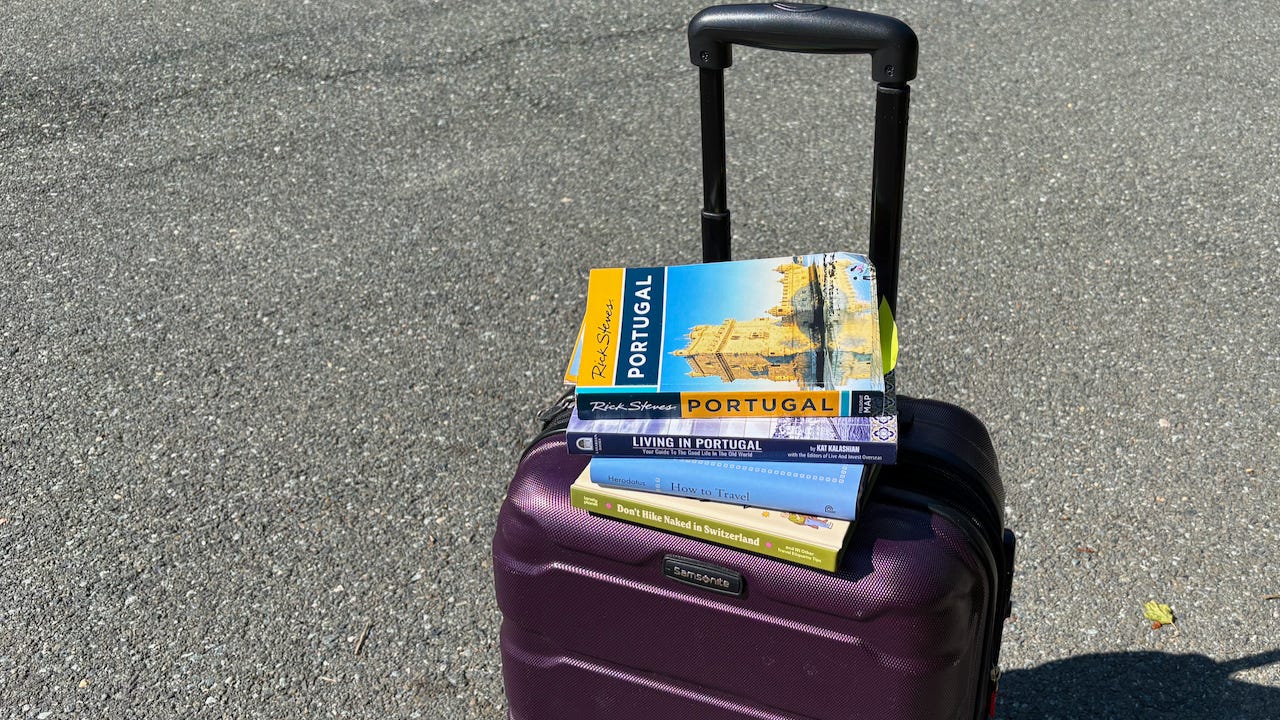
Looking back, I suppose the signs were obvious. For months, my wife’s attention has been captured by another man. Night after night, I found her in bed with Rick Steves.
Tomorrow, Dawn and I — along with a dog-eared copy of Rick Steves Portugal, 13th edition — will fly to Lisbon. We won’t be gone forever, although that certainly seems to be the trend.
According to a story in The Wall Street Journal, Yankees are emigrating in record numbers, desperate to live somewhere cheaper and safer. Portugal alone has seen its American population increase by more than 500 percent since the Covid pandemic. Tourists hoping to soak up local culture in Lisbon complain they mostly hear English.
Not coincidentally, travel guides have pivoted to accommodate guests who plan to stay long after fish begin to stink.
In Living in Portugal, Kat Kalashian, an editor with Live and Invest Overseas, writes, “We named thin-sliced corners of this beautiful, sunny, friendly, safe, welcoming, and affordable country as the world’s top retirement haven for nine years running.”
Most of her book is an enthusiastic selection of famous and quirky recommendations for travelers, but the last section is designed to inspire retirees searching for permanent paradise. Kalashian has many suggestions outside Lisbon, including Caldas da Rainha, “where the water heals and the pottery reveals,” which, let’s face it, sounds better than bingo in Bethesda.
A 2025 Gallup survey found that about one in five Americans would like to move permanently to another country.
But before trading in my Honda for a donkey in Vimioso, it might be prudent to learn a few basic rules to avoid being a jerk. Patrick Kinsella’s Don’t Hike Naked in Switzerland: And 101 Other Travel Etiquette Tips is here to help, though I’m too lazy to hike and too prudish for naked.
Published by the good folks at Lonely Planet, this cleverly designed book is at least as useful as it is funny. If you know a recent graduate heading out on their first international adventure, give them a copy along with some spending money.
I had no idea that Australian taxi drivers expect riders to sit alongside them. Or that I could be fined for failing to flush the toilet in Singapore. Now I know never to cut my pasta in Italy.
Kinsella’s “Cheeky Kiss Cheat Sheet” lays out exactly “how many pecks” to exchange when greeting friends in 24 different countries, but that’s a lot to remember for an uptight, dry-lipped American.
“You do need to learn how to coexist with the people you meet,” Kinsella writes, “especially the locals and your long-suffering hosts.” Is it any wonder that frustrated residents of Barcelona are squirting tourists with water guns as their gorgeous city groans under the weight of its own popularity?
Perhaps it was ever thus, or at least that’s what I gather from How to Travel: An Ancient Guide for the Modern Tourist, edited and translated by M.D. Usher.
Drawing on texts by Herodotus, Tacitus, and other Greek and Roman writers, Usher reminds us that travel has always been full of enticing wonders.
Seneca gets things off to a sober start by telling a peripatetic friend that endless wandering will never cure his depression. “You need to change your mind, not your climes,” the Stoic philosopher writes. “You must lay down the mind’s burden. Until you do, nowhere will satisfy you.”
But after that, it’s the world’s most fantastical Carnival Cruise.
Most of the book offers wide-eyed impressions of ancient foreign lands, like Tacitus’s report on the handsome if weirdly uniform barbarians of Germany, or Herodotus’s stories about the way Egyptians, despite being “the most religious people on earth,” do almost everything “entirely opposite to those of other peoples.”
Lucian takes these travelers’ tales to their absurd limits and writes about his sojourn among the people on the Moon, including the Dendrites, who propagate by cutting off their right testicles and planting them in the ground.
“Out of their noses runs the most pungent honey,” Lucian claims. “When they work or exercise, their bodies sweat milk all over in such quantities that you can make cheese out of it.”
Imagine explaining that to the customs agent back home.
Appropriately, Usher ends with a selection from Homer about Odysseus’s flea-infested dog, Argus, seeing his master finally return. “He wagged his tail, dropped both ears,” and passed away content at last.
Home sweet home.◆
The rest of the newsletter follows below.
Books Go to the Movies
Reese Witherspoon was so iconic as Elle Woods in Legally Blonde that I’d forgotten it all started with Amanda Brown’s 2001 novel inspired by her experiences at Stanford Law School. On July 1, we’ll travel even further back: Elle, starring Lexi Minetree, follows the future legal star as she adjusts to high school in Seattle. The series has already joined that rarefied club of TV shows that earned a second season before debuting. “What? Like it’s hard?”
Supergirl, starring Milly Alcock as Superman’s cousin, Kara Zor-El, is soaring through theaters (trailer). When a young girl asks Kara to help track down her father’s killer, their quest for vengeance takes them across the galaxy. Supergirl first appeared in Action Comics in 1959.
American Ballet Theatre’s production of Onegin is running through Saturday at the Metropolitan Opera House in New York. John Cranko’s choreography, set to music by Tchaikovsky, is based on Alexander Pushkin’s early 19th-century verse novel Eugene Onegin, about a Russian rake who misses his chance at happiness (Behind the ballet).◆
You Are Here
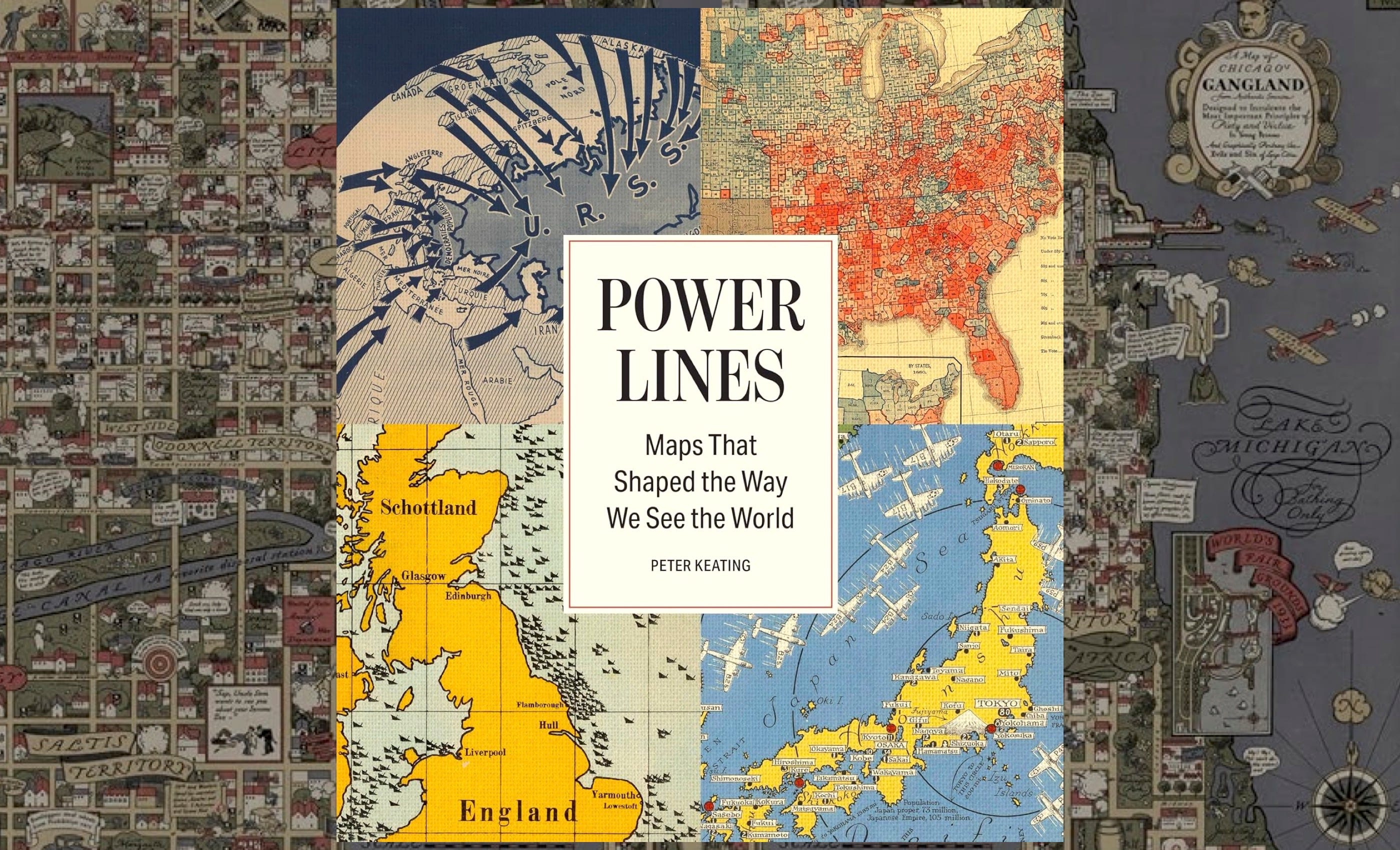
My summer plans have got me looking at a lot of maps, but Peter Keating’s new book has me seeing them in a whole new way.
Power Lines is a highly caffeinated coffee-table book. It contains hundreds of antique full-color maps, cleverly arranged into chapters on “Dominion,” “Partitions,” “Social & Ideological Movements,” and more. Each one is illuminated by Keating’s insightful commentary.
“All maps show us where we are,” he writes. “Some maps also try to tell us what to think — and that’s where things get really interesting.”
Keating is particularly interested in “political maps,” what he calls “the most dramatic and influential of all maps,” which teach people how to see the world.
Created in England around 1300, the Hereford mappa mundi presents an aggressively Christian vision of the planet, with physical geography subordinated to spiritual geography.
Waldseemüller’s Universalis Cosmographia (1507), now in the Library of Congress, is the first map to label the Americas and to boldly speculate that they constituted an independent “Fourth Part of the World.” His map became enormously popular and captivated Europe’s imagination.
Keating finds maps everywhere: in Vermeer’s paintings, on postage stamps, and as political cartoons. He analyzes Fred Rose’s Serio-Comic War Map for the Year 1877, which shows Russia as a giant octopus reaching out to grasp Poland, Finland, and other countries.
Inevitably, many of these maps tell stories of humanity’s cruelest ambitions: Hitler’s map of European domination, U.S. maps of Indian resettlements, and the map that inspired the Partition of India in 1947.
Given the times we live in, Keating’s short essay on The Gerry-Mander (1812) — a reptilian-looking map of Massachusetts — could easily fill an entire book. And in a fascinating coda near the end of Power Lines, he examines the U.S. Electoral College map, which visually privileges empty land over American voters.
“This antidemocratic potential has been weaponized by the leader of the world’s most powerful democracy,” Keating writes. “Whether you’re a fan of politics, cartography, or both, you have to reckon with the fact that MAGA and maps were made for each other.”
Power Lines shows us where we’ve been, why borders matter — and how every map shapes the way we see the world.
If you’d like my copy of this irresistible book, be the 49th person to email me with the subject line “Power Lines” (email).◆
Declaring America: 1776 and Beyond
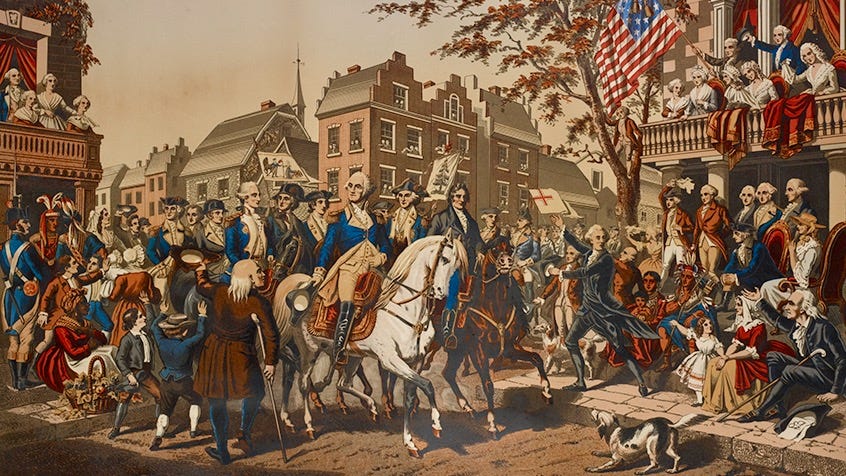
A new exhibit at the New York Public Library offers a chance to reconsider how this country began — and how we arrived at this moment.
More than 250 objects and documents from the Library’s vast collection illustrate the nation’s democratic ideals and particularly the role that protests have played throughout American history (details).
The exhibit includes a letter from Benjamin Franklin to George Washington about preparing the Declaration of Independence, a broadside copy of the Declaration printed in New York City on July 9, 1776, battle maps of New York during the Revolutionary War, and a banner used by activists to celebrate the abolition of slavery in Great Britain in 1834.
The Library’s copy of The Star-Spangled Banner — now on display at The New York Public Library for the Performing Arts at Lincoln Center — is one of just a handful of surviving copies. You can tell it’s authentic by the misspelling of “patriotic” in the subtitle. (Truly, everybody needs an editor.)
The exhibit also features contemporary artwork by David Hammons, Barbara Kruger, Kara Walker, and others.
And if you can get a ticket — which isn’t easy — you’ll see Thomas Jefferson’s handwritten copy of the Declaration of Independence, on display July 1-7. The last batch of tickets will be offered June 29, at 10 a.m. (details).
If you can’t get to New York, you can still access the Library’s “Reading America: 250 Years, 250 Books,” a curious list of titles designed to “illuminate the American experience from a variety of perspectives.” That list alone could spark a little revolution in your book club.◆
Picture This
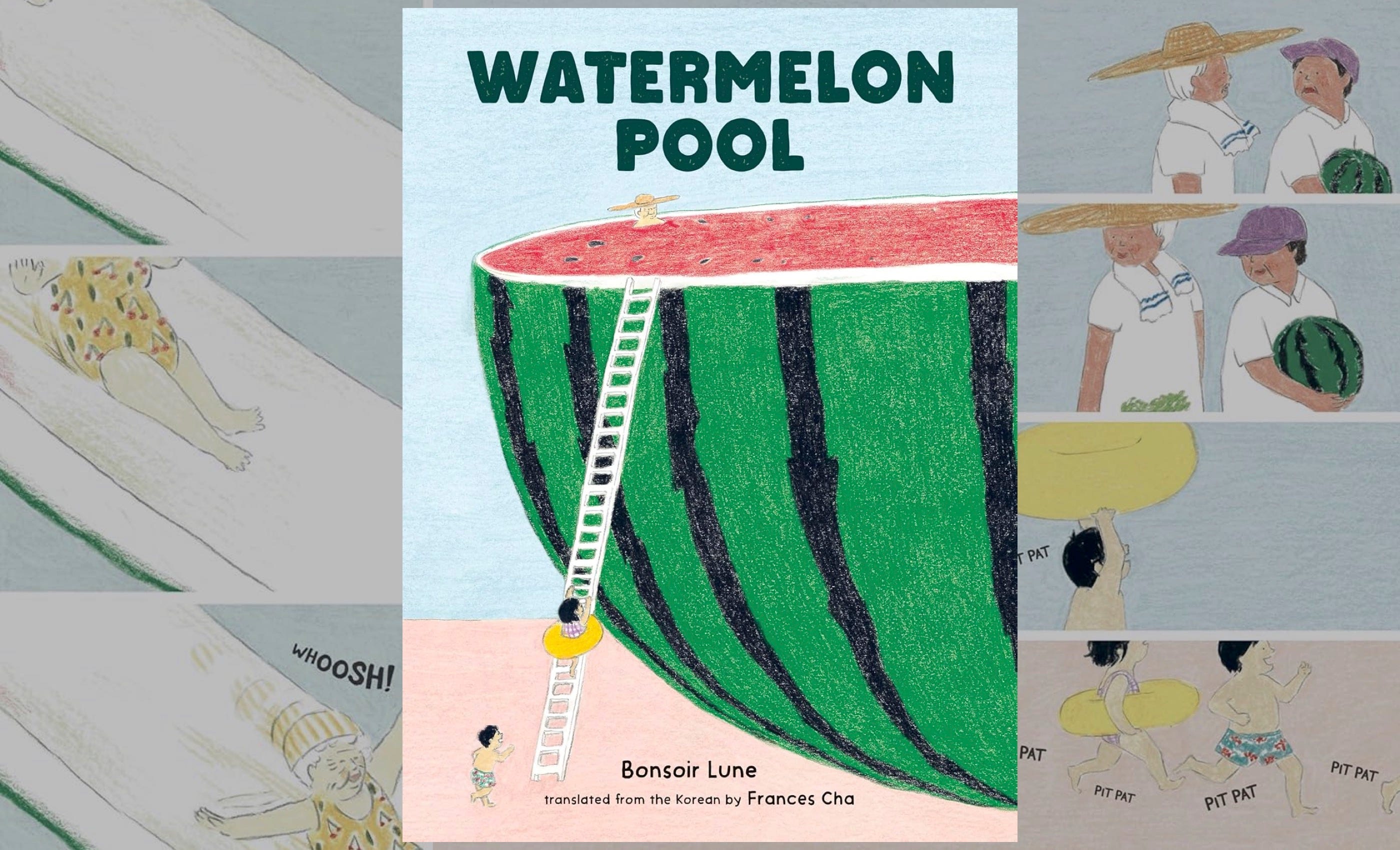
With summer temperatures sizzling, everybody should grab a towel and jump into Bonsoir Lune’s Watermelon Pool.
As this surreal story begins, a watermelon ripens under the sun and splits open.
Then things get delightfully weird.
A white-haired man in a bathing suit climbs a ladder to the top of the watermelon rind, surveys the wide expanse of pink, and jumps in. “Mmm,” he murmurs. “Nice and cool!”
In a nearby field, a neighbor remembers, “Last year, it was so hard to swim because there were too many seeds.”
Of course, the kids don’t mind a bit. They come running with their inner tubes and plop into the juice. “Splish! Splash!”
A peddler sells parasols made from little clouds.
Lune’s illustrations look sweet enough to eat, and their wild inversion of sizes — everything big is small, and everything small is big — will charm even the littlest dreamers.
The simple text, translated from Korean by Frances Cha, provides just the right notes of squealing fun.
Best of all, when the swimming’s over, you can eat the pool.◆
This Week’s Poem
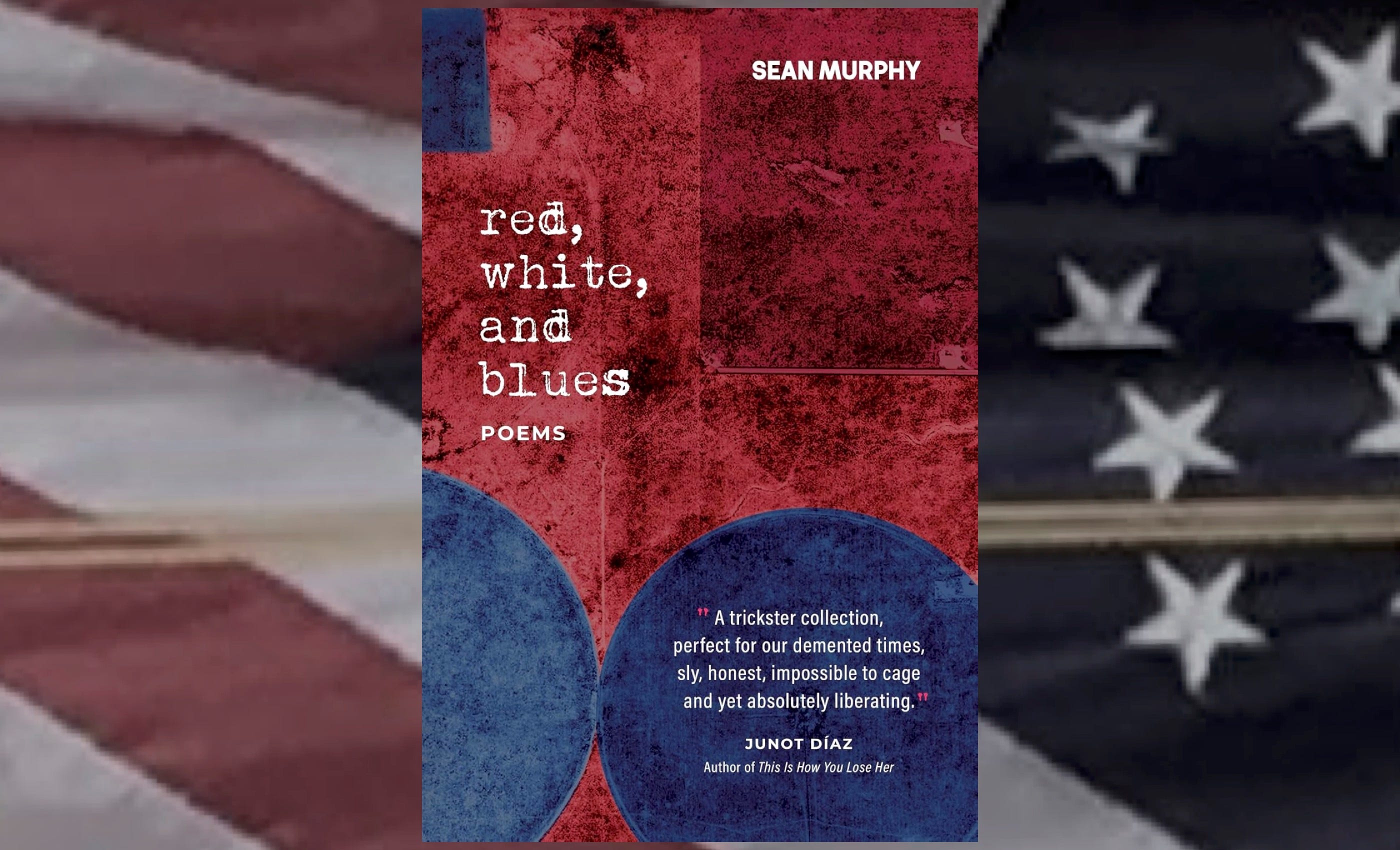
Sean Murphy, the founder of 1455 Literary Arts, a nonprofit supporting writers and readers, has published a wry collection called red, white, and blues that feels just right for America’s deeply troubled 250th birthday party.
Murphy writes in the introduction, “These poems are not interested in neutrality; they are interested in clarity. They move through history and pop culture because that is where our myths live — where power learns to hide and where harm learns to look inevitable.”
If you don’t get this poem, I’d be happy to ship it to you overnight for free.
Jeff Bezos’s Billions
Billion-dollar babies are building their own toys,
taking them to outer space (inner space, of course,
that final frontier the wealthy will never breach).
The rest of us are stuck here on earth, amazed
and mystified by how humans understood shit
fertilized their fields, or how to create panacea
out of potatoes, or that, speaking again of waste,
we turned chamber pots into sewage systems —
the kind of revolution that launches rocket ships.
What we consume, recycled and repurposed,
still seems as miraculous as electricity or energy
derived from oil, a kind of anti-evolution wherein
we destroy this world by abusing what it produces.
Even to entrepreneurs or idealists, all this talk of exploring
other planets seems an obvious distraction to avoid
focusing on the one we actually inhabit, unwilling
to fix what we break while busy buying immortality.
Excerpted from “red, white, and blues.” Copyright © 2026 by Sean Murphy. Published by Bright Moment Books. Reprinted with permission of the author.◆
How Shakespeare Saved My Life
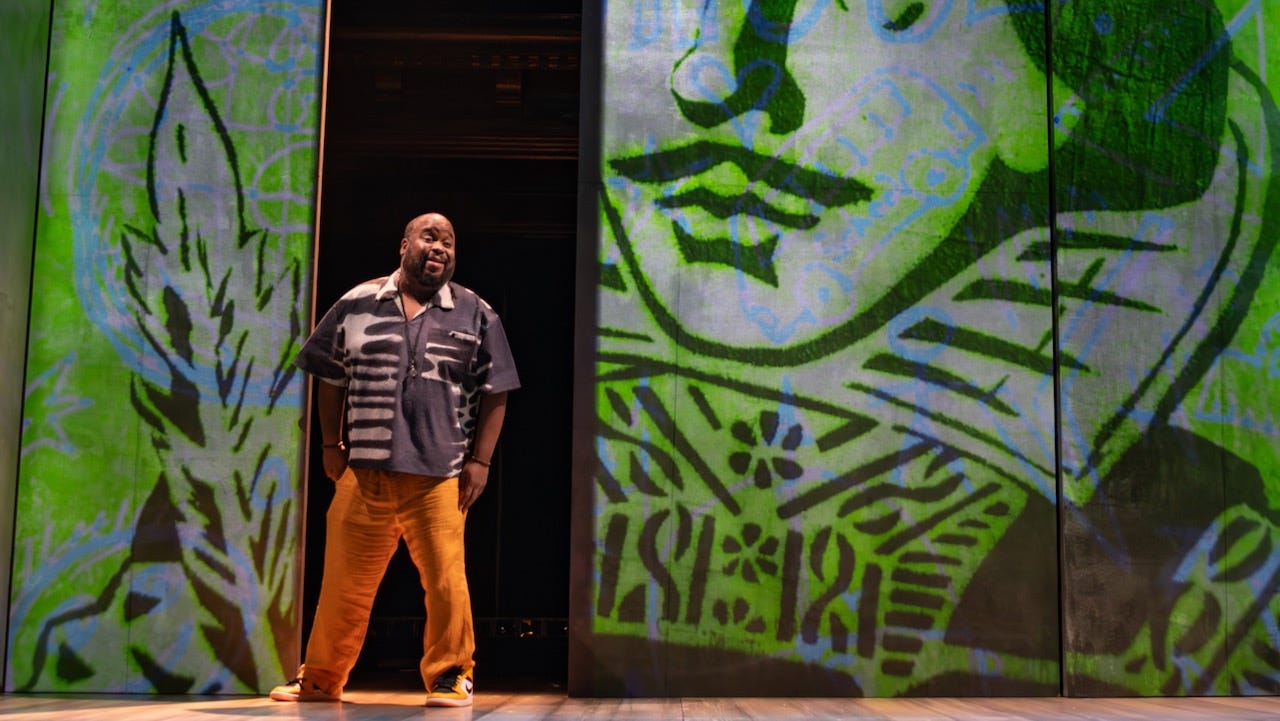
That title struck me as hyperbolic, but after seeing Jacob Ming-Trent’s autobiographical one-man show at the Folger Theater in Washington, I’m convinced.
Performed on a bare stage, the show is a wrenching testament to the power of Shakespeare’s words.
Addressing the audience as his congregation, Jacob explains that he fell in love with the Bard after accidentally walking into the wrong classroom. The teacher — also the football coach — made him read the St. Crispin’s Day speech in Henry V.
At that moment, the young man knew he wanted to be a Shakespearean actor. And why not? Quoting from The Merchant of Venice — “The quality of mercy is not strain’d” — once got him out of detention. And by sweetly reciting lines from The Two Gentlemen of Verona, he lost his virginity.
But he got little encouragement beyond that. His mom threw him out at 16. He lived on the streets for long stretches of time. When he finally took an acting class in New York, the teacher told him, “A fat Black person cannot play Shakespeare.”
He spent years surrounded by desperate poverty, violence, and drug addiction.
The only thing he could hang on to was his knowledge of the plays. “It’s either Shakespeare or die,” he says, “and I want to live.”
The 90-minute performance is extraordinary — laced with lines from Shakespeare and rap music and marked by Ming-Trent’s uncanny ability to slip in and out of the characters in his life story, including an inmate who helps him recognize the Bard’s transgressive spirit.
“Shakespeare,” Jacob realizes, “was just an urban poet reporting what he saw.”
How Shakespeare Saved My Life will move to The Public Theater in New York on Sept. 15 (tickets). The script was recently published by Bloomsbury (shop). And you can hear a terrific interview with Ming-Trent on the Folger’s podcast, Shakespeare Unlimited (listen).◆
Clippings
This week’s review is The Fervent Whites, De’Shawn Charles Winslow’s taut thriller about the exonerated and the guilty — and how hard it can be to tell them apart (review).
Ann Patchett won the Library of Congress Prize for American Fiction. She’ll receive the honor at the National Book Festival in Washington on Aug. 22. (The full list of attending authors will be announced in early July.)
Sarah Wynn-Williams, a former Facebook executive, has filed a lawsuit against Meta, claiming that the company has illegally prevented her from talking about her 2025 exposé Careless People.◆
Hope Rick Steves doesn’t constantly talk while in bed with your wife. He has a habit of not letting anyone get a word in edgewise which can be annoying! You made me laugh out loud and I had only a sip of my first cup of morning coffee. Nice read.
enjoy lisbon, my favorite city in the world! please have a pasteis de nata every day and visit black sheep wine bar!