Colson Whitehead’s Last Heist
“Cool Machine” bids farewell to Ray Carney in a witty, bloody, and unexpectedly moving finale to the Harlem Trilogy.

The Tuesday Review
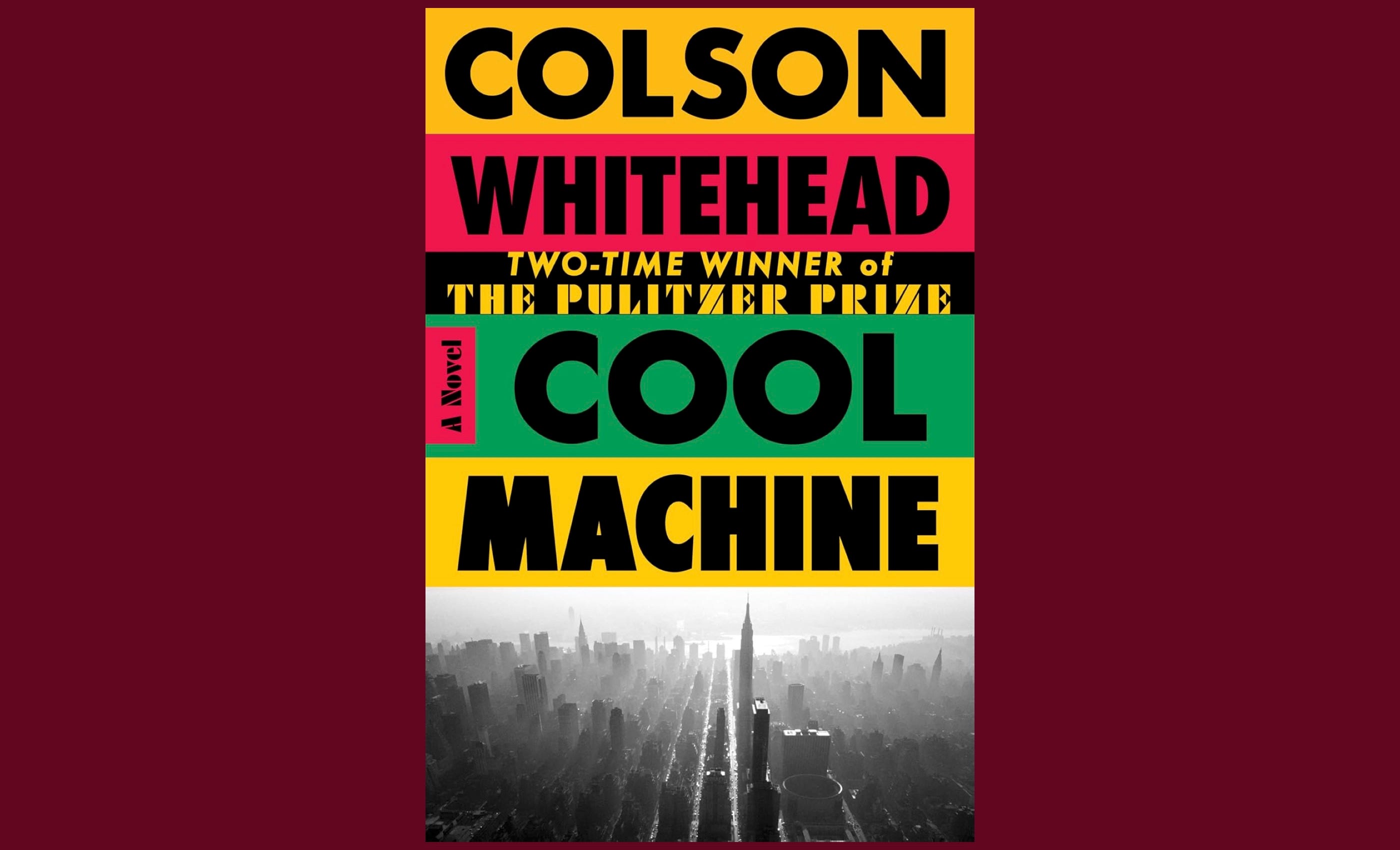
Go slowly. This is goodbye.
Colson Whitehead’s Cool Machine concludes one of the richest portraits of New York — a suave trilogy of novels that opened in the late 1950s with Harlem Shuffle.
Now, it’s the 1980s in a city where “the only permanent tenants were hustle and impermanence.” New buildings rise every day, but “the richer those up top got, the more miserable and numerous those below became.” Yuppies are taking over, and Reaganomics is engorging Wall Street while “cleaning out the flophouses and SROs, closing the institutions, cutting social services.”
Through it all, somehow Ray Carney has survived, even thrived. A mostly reputable furniture salesman, Carney knows how to match a striped sofa with the drapes or, if necessary, a stolen necklace with a buyer. When we catch up with him this time, he’s started to think of himself as “one of the old guys.” He doesn’t need to fence hot TVs any longer — doesn’t even want to, he claims. After 27 years in the biz, he’s finally been named Northeast Regional Dealer of the Month by Sterling Quality, the monthly magazine of the Sterling Furniture Company.
What nobler proof of success could a man desire?
Whitehead loves to hover on that transparent boundary between sympathy and teasing. He’s shacked up with Carney long enough to know where all the man’s dreams and delusions are buried, and the final volume of the Harlem Trilogy finds author and hero looking at where they’ve been and wondering what comes after ambition. It’s a story about both the allure and the dread of retirement, about trying to assess one’s life without concluding it.
But if nostalgia pumps through these pages, it leaves the iron taste of fresh blood. Carney’s every other thought is consumed with his future. “He had wanted to be a good father and husband. He had done that,” Whitehead writes. “He had wanted to be a successful businessman. He had achieved that. And now what? A force pushed Carney forward to the next corner. He didn’t know where to or what for.”
Even the East Village graffiti artist spraying just one step ahead of Mayor Koch asks, “Who Are You Now And Who Do You Want To Be?”
In this state of existential restlessness, Carney enlists with Uncle Rich, “the legendary uptown criminal mastermind,” for one last string of heists. Uncle Rich was long presumed dead. “Everyone should fake their death at least once,” he advises. “It’s clarifying.” And thank God he’s back. Uncle Rich is Whitehead’s Arsène Lupin, an urbane master of disguise who makes as much money conceiving schemes as carrying them out. “How to put it, the immensity of the man?” Whitehead asks. “Harlem cranked out its allotment of vicious mobsters, stone-cold killers, gambling impresarios, and cunning thieves — even an able fence or two — but no one before or since had so completely captivated Harlem’s cops and criminals. He was half crook, half crooked fantasy.”
Carney tells himself he joins up because he needs extra money to fund his wife’s travel business, but get real: “Deep down he loved the chaos as much as the next crooked soul.” He thrills to see “pistols glinting like minnows in the scant light.” This man wants to feel alive again, and you will too, riding along with Uncle Rich and his crack team through escapades so cinematic the book should come with a bucket of popcorn.
I asked Colson Whitehead, “Now that you’ve completed your Harlem Trilogy, what will you miss most about living with Ray Carney?”
I was tempted to feel disappointed that the middle section — set two years later, in 1983 — shifts away from Carney. But the result is an irresistible novella about Pepper, Carney’s avuncular associate who adores his word-a-day calendar. (As one might expect in a Whitehead novel, these characters are obsessed with words, with the slippery eels of language.) Now in his 60s and unimpressed by the “improvements” overtaking New York, Pepper “gave off menace the way movie stars gave off charisma, in beams.” He suspects he’s dying but hopes swigs of Pepto-Bismol will keep the Grim Reaper tied up in red tape.
As a favor to Carney’s wife, Pepper accepts a job providing security for an art deal involving an African mask with shady provenance. It’s no spoiler to tell you that something about that plan goes wrong, and then everything goes wrong. But what makes this section such a delight is the chance to sit — and run — with Pepper, who is surely the coolest machine in this trilogy. “He was an old thief. And a good thief,” Whitehead writes, and despite that life of thievery, he lives by an unbreakable code that comes to look a lot more ethical than the behavior of anyone more reputable.
That irony gets spread on even thicker when Pepper’s opponent — a character called the Melancholy Hitman — enters the scene. He’s like Cormac McCarthy’s monster if Judge Holden read You Can Heal Your Life every night before bed. Whitehead has always relished the comedy of killers’ genteel affectations, and watching the Melancholy Hitman try to lift his spirits by doing his “I Feel” vocalizations is one of this novel’s many silly pleasures. “A fellow killer suggested he get a pet. That helped some.”
The African mask that the Melancholy Hitman, Pepper, and others are pursuing comes to embody the elusive identities they’re all chasing. Every one of them wants to know who they are or, better yet, who they could be. And they’re willing to kill, sometimes gruesomely, to find out.
But for all its bullets and mayhem, Cool Machine is ultimately a meditation on growing old without surrendering one’s appetite for life. That might sound melancholy, but it’s probably illegal to have this much fun writing a crime novel. Like the finest renovators, Whitehead moves into the antique building, treasures the old molding, and manages to construct a space that respects the past while offering something wholly new. He’s perfected a voice of mock formality shot through with morbid humor, absurdity, and gore. Who else makes a sentence work so hard without breaking a sweat?
“There’s a story to crime,” Carney thinks, and Whitehead knows how to tell it. I’m bereft that one of them is done but eager to see what the other one does next.◆
Cool Machine, by Colson Whitehead (Doubleday, 368 pp., $30)
Previous review: Cloudthief
In Nathaniel Rich’s unsettling thriller, the most valuable loot is us.
I read an advance copy of this last year and I think it may be my favorite of the three.
It's hard to think of a living writer with more range than Colson Whitehead.
Oh I am so excited to read this and have been for months. Your review just solidifies my anticipation, which is also tinged with.a bit of sadness to close this brilliant trilogy. Pepper is one of the all time great crime novel characters in my opinion, so I am happy to see he gets his due time here. Everyone should experience this whole trilogy-such a brilliant showcase for who Whitehead is as a writer (one of our greats, in my opinion). Thanks for the rich review!