So True It’s Impossible to Prove
Two fascinating books examine how people decide what to believe.

As the midterms approach, the MAGA sect is reaffirming its core delusions with extra fervency. Chief among those beliefs is widespread election fraud — a spectral phenomenon that feels more convincing the less evidence there is.
Asked to support his claim that California’s vote-counting process “stinks to high heaven,” Speaker of the House Mike Johnson said, “Look, some of these efforts are so diabolical and so far upstream that it’s impossible to prove, but I think everybody knows instinctively something is wrong here.”
In other words, election fraud “is the substance of things hoped for, the evidence of things not seen.”
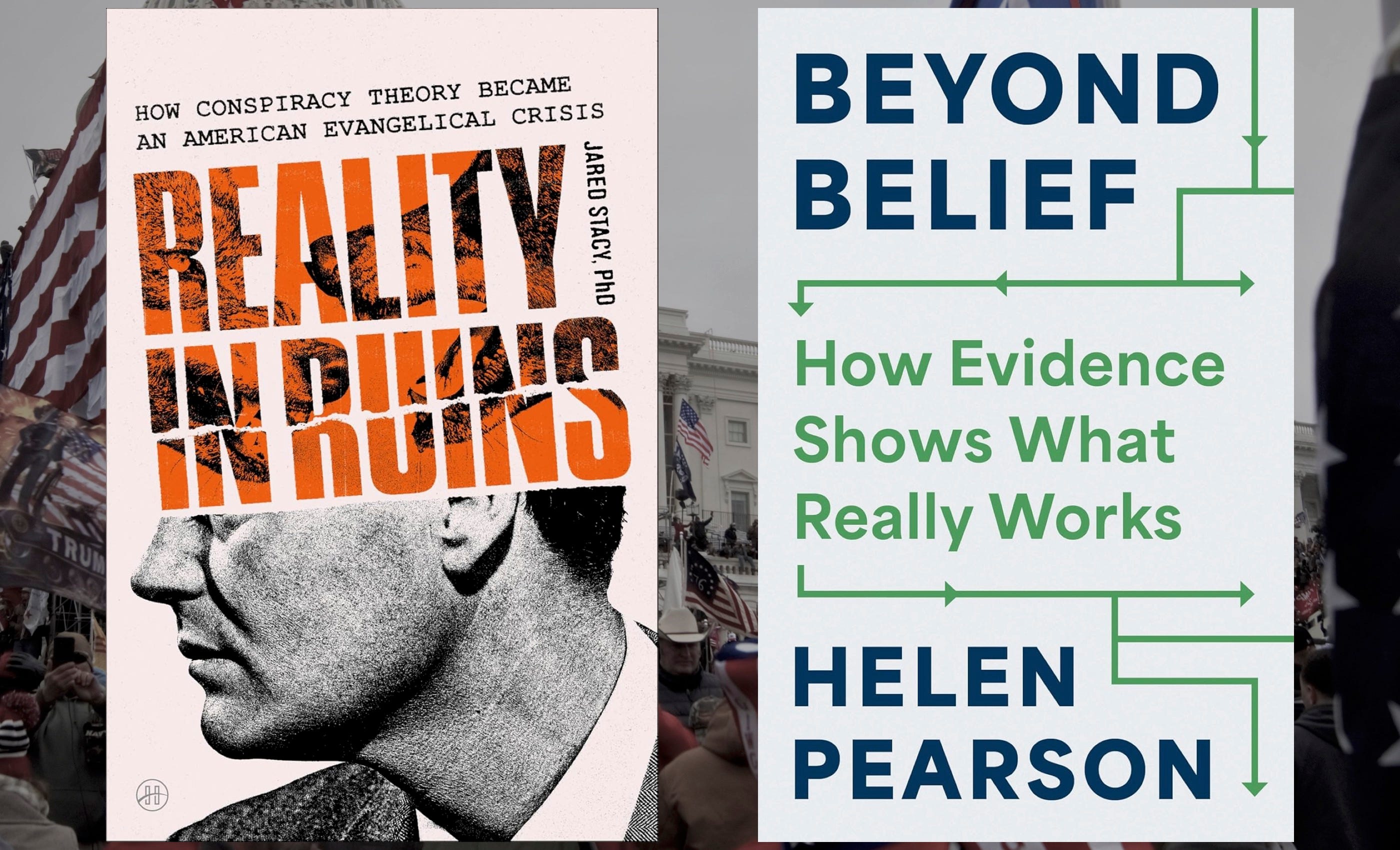
An illuminating new book called Reality in Ruins has helped me understand the tragic affinity between political paranoia and a certain strain of conservative Christianity.
The author, Jared Stacy, is a former pastor who sets out to show that “conspiracy theory isn’t a bug, but a feature of evangelical Christianity in America.” Still very much a believer, Stacy looks back — from the Salem witchcraft trials to the Jan. 6 riot — to examine how the rhetoric of spiritual peril has been subverted to serve purely political goals.
Stacy notes that conservative Christian groups mobilized aggressively to promote the claim that Biden had stolen the 2020 election. They “propped up the lie by using overtly theological language, often blaming the ‘demonic Democrats’ and issuing calls to prayer when Trump refused to concede.”
“The plausibility rested not in the facts of the case, but in their association with the authority reflected in the Christian story. Taken this way, it didn’t matter whether Democrats actually stole an election. What mattered, and what any ‘biblical’ Christian knows, is the Democrats are the kind of people who would steal an election…. The theological and moral plausibility of the Big Lie justified the violence to come.”
Most provocatively, Stacy argues that when the central miracle of Christian faith — Jesus’ resurrection — is miscast as “the prime alternative fact,” it can then be exploited “to authorize other transgressive claims or minority reports on things like vaccines, climate change, or the age of the Earth.”
Jesus loves me, this I know,
Mail-in voting’s got to go.
Now, Stacy warns, many evangelicals are trapped in the “totality of holy paranoia,” where faith in the rightness of Jan. 6 is used “to sanction a myth that will fuel unrestrained seizures of power and tactics of terror.”
As a Christian myself, I appreciate that Stacy isn’t out to prove how crazy evangelicals are. On the contrary, he’s determined to challenge the pernicious element of political conspiracism within the church and reaffirm the essential values of Christian faith that make such violent certainty illegitimate.
Helen Pearson approaches the problem of evidence from an entirely different direction in her new book, Beyond Belief: How Evidence Shows What Really Works. She begins with the startling claim that “the term evidence-based medicine is barely 35 years old.”
From there, she goes on to chronicle “an evidence revolution” driven by people who are transforming business, education, social policy, and policing.
Somehow, I thought this revolution was won during the Enlightenment, but Pearson says all kinds of modern-day fields have rested on conventional wisdom, precedent, and, as Mike Johnson calls it, what “everybody knows instinctively.”
What’s particularly alarming is that we’re drifting back into those medieval vapors.
The Covid-19 pandemic and the extraordinary rush of research it generated also inspired a backlash of misinformation and skepticism about evidence. Given Trump’s systematic attacks on science — and his appointment of a kook as secretary of Health and Human Services — the way forward is not clear.
“Right now,” Pearson writes, “the world needs more people who value evidence, because those who don’t are gaining strength.”
She concludes her book with a list of simple ways to “join the evidence revolution.” For instance, “be skeptical and ask for evidence,” but don’t be a fool. “Many decisions don’t need an extensive review of the evidence.... Wear a parachute when jumping from a plane.”
The most profound advice she has is also the easiest: “Citizens of democratic countries have a voice at the voting box, where they can support politicians who stand up for evidence.”
The results of that experiment will become clearer in November.◆
The rest of the newsletter follows below.
Books Go to the Movies
The 11th season of Grantchester begins Sunday on PBS. It’s the summer of 1963, and vicar Alphy Kottaram (Rishi Nair) is struggling with his faith, as one does in the final season. The long-running series is based on The Grantchester Mysteries, written by James Runcie, about a clever cleric who helps Detective Inspector Geordie Keating solve crimes in a town that, except for a surprising number of murders, is quite idyllic.
The Listeners, starring Rebecca Hall, premieres today on Starz (trailer). The five-part psychological thriller is adapted by Jordan Tannahill from his own novel about a schoolteacher who begins hearing a low humming sound. This is the kind of tinnitus you really, really don’t want. (Not to be confused with Maggie Stiefvater’s WWII novel The Listeners, just released in paperback.)
Sweet Magnolias, starring JoAnna Garcia Swisher, Heather Headley, and Brooke Elliott as lifelong friends in Serenity, S.C., is streaming again on Netflix (trailer). The series, now in its 5th season, is based on romance novels by Sherryl Woods. Get your tissues: The friends are going to New York to find Helen a wedding dress.◆

Are affluent library users impoverishing authors?
A surprising report from the Authors Guild finds that “readers most likely to borrow from a library” are people who could afford to buy new books.
This is part of a marked shift in book consumption that may be contributing to the steep decline in writers’ income.
The AG report found that only 19 percent of the books people read were bought new — the category that generates the highest royalties for authors.
“Almost two-thirds of readers obtain books for free — whether from friends, personal collections, libraries, pirate sites, or other free sources.” No matter how many times they’re recycled and reread, those books generate little or no additional income for writers after the initial sale.
This pattern is even more pronounced if you’re famous: The AG report discovered that readers of the most popular authors — Stephen King, Colleen Hoover, etc. — are less likely to buy their books.
“The authors with the highest name recognition — and whose books libraries stock most aggressively — see the greatest substitution of borrowing for buying.”
People who don’t borrow physical books or ebooks from the library bought 73 percent more new books than library users.
The pattern extends to audiobooks, too, now that public libraries are “the single largest source of digital audiobooks.”
The initial report acknowledged the convenience of library borrowing but noted “a steep tradeoff”: “If authors cannot earn enough from writing, they will not be able to write for a living and will write less or not at all.”
But those lines were deleted a day later after I sent an email to the Authors Guild expressing surprise at “the anti-library tone” of its report.
An entire section called “Library Ebook and Audiobook Library Lending” was also deleted. It argued that “the author often loses some sales and income when readers switch to online library reading.”
It’s true that some publishers — such as former Macmillan CEO John Sargent — have warned that free, frictionless e-book borrowing from libraries can reduce book sales and author income. But I’m much more used to hearing publishers praise libraries for increasing literacy and improving authors’ discoverability.
On Wednesday, when I spoke to Authors Guild CEO Mary Rasenberger, she was quick to reject any suggestion that the report was anti-library.
“No, no, no — that is not the takeaway,” Rasenberger said. “We’re not against libraries. We love libraries.”
And the report was “not meant to be a criticism of readers by any stretch of the imagination.” But “it should give us pause and really make us think about how readers think about books.”
She was genuinely surprised by the finding that most people aren’t buying new books. That’s a real concern for authors.
“How are we to monetize books,” she asked, “if we’re in a culture that doesn’t think that books are something they need to pay for?”
The analogy to news — another form of writing that people have grown accustomed to getting for free — occurred to us both.
For the time being, the Guild has no policy recommendations based on this report.
“I just wanted to get it out there,” Rasenberger said, “so people saw this.”◆
Father’s Day is June 21
I’ve long been skeptical of Father’s Day gift guides. They typically imply that Dad is a barbecuing alcoholic golf fiend.
In the interest of gently expanding that category, here are some ideas for fathers and father figures:
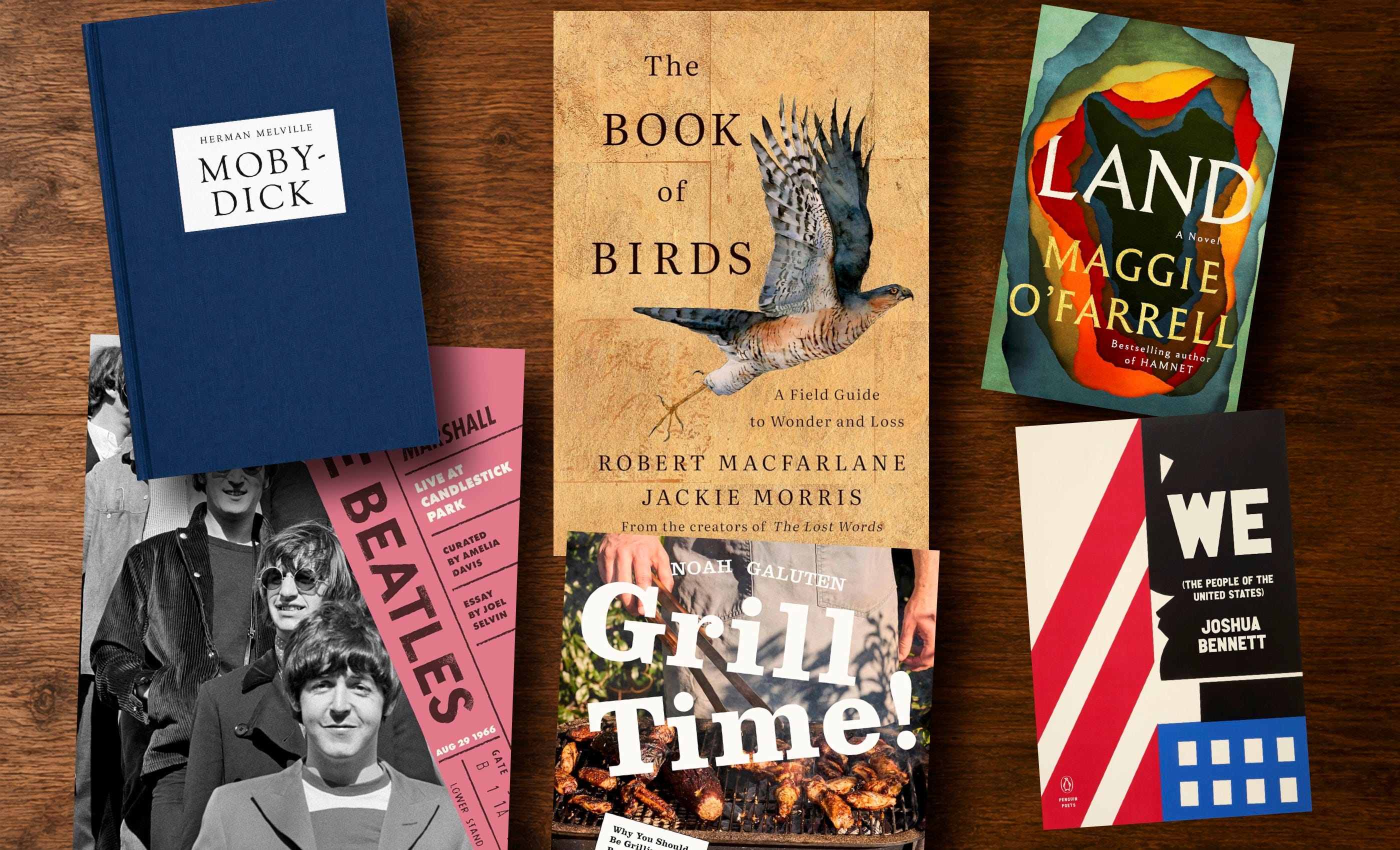
The Book of Birds: A Field Guide to Wonder and Loss, by Robert Macfarlane and Jackie Morris. This gorgeous book, filled with watercolor images, celebrates the lives of 49 “once common” bird species. The short essays are reflective, often poignant, with an almost sacred aura.
To celebrate the 175th anniversary of Melville’s classic, The Folio Society will release a fine new Moby-Dick. This limited edition includes illustrations by Mu Pan and an introduction by my friend and former colleague Michael Dirda. At $750, you’ll have to grab Captain Ahab’s gold doubloon off the mast to afford it, but “there is no frigate like a book” (details).
Maggie O’Farrell’s stirring new novel, Land, tells the story of a father who hears the call of an ancient spring and drags his family to a remote Irish promontory in the years after the Great Famine (review).
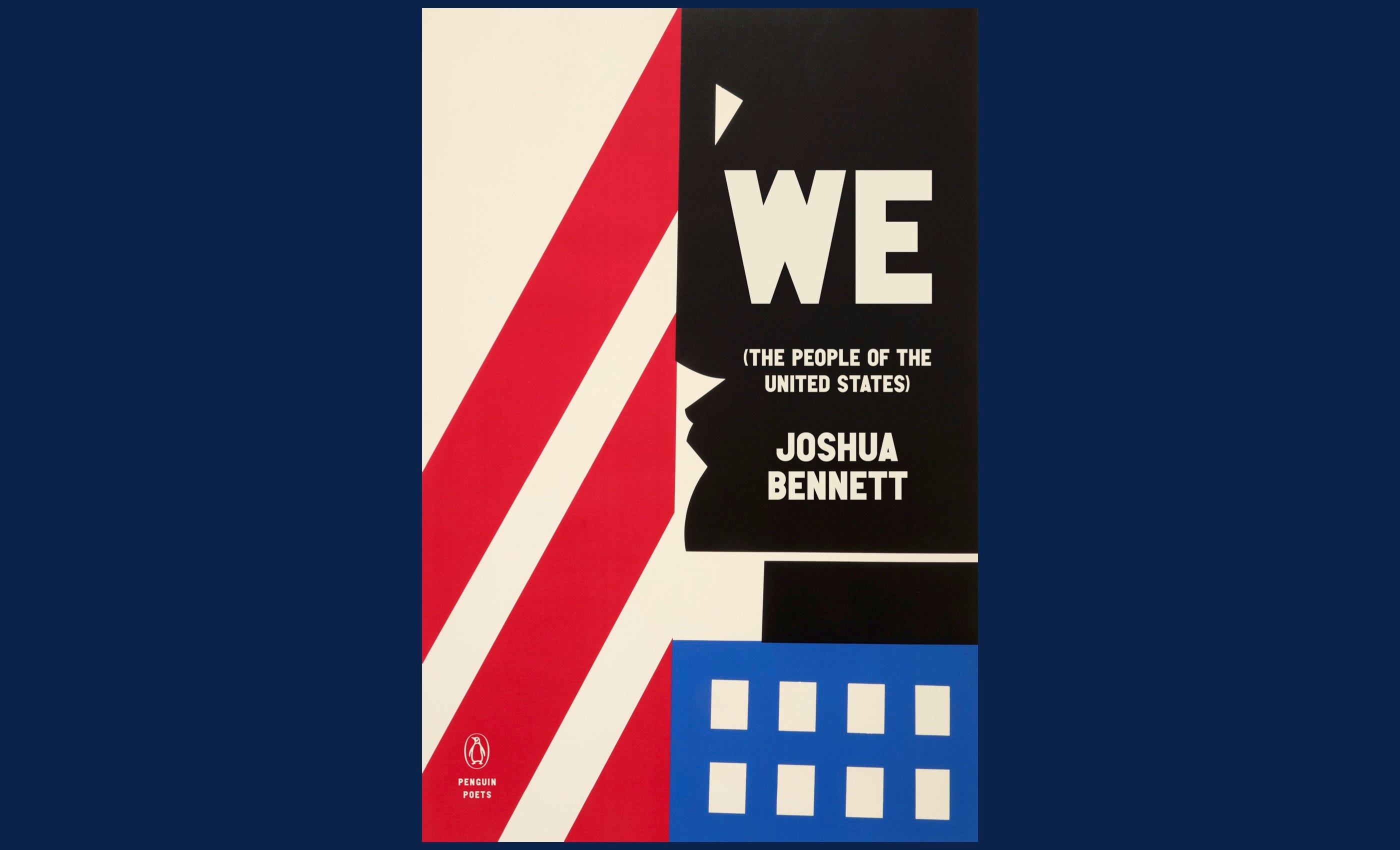
Joshua Bennett’s new poetry collection, We (The People of the United States), starts with kids who “grew up listening to the gossip / of elders in crowded salons,” and then it moves out across the country, from Yonkers to Lynchburg to Little Rock, reflecting on Zora Neale Hurston, Gwendolyn Brooks, the Beach Boys, and many others. (See excerpt below.)
Jim Marshall’s striking photo book The Beatles puts you right there, at San Francisco’s Candlestick Park on Aug. 29, 1966, for the group’s last ticketed public concert.
Grill Time! Okay, I had to include at least one. Noah Galuten explains in the most persuasive way possible “why you should be grilling for better, healthier, easier, and more delicious meals.” Contains mouthwatering photography — by Kristin Teig — and lots of creative ideas, like “grilled avocado tostadas with chipotle-lime crema.”◆
Picture This
I’m sorry/not sorry to admit that the most irresistible book of the year is one meant for 4-year-olds (and, apparently, 64-year-olds).
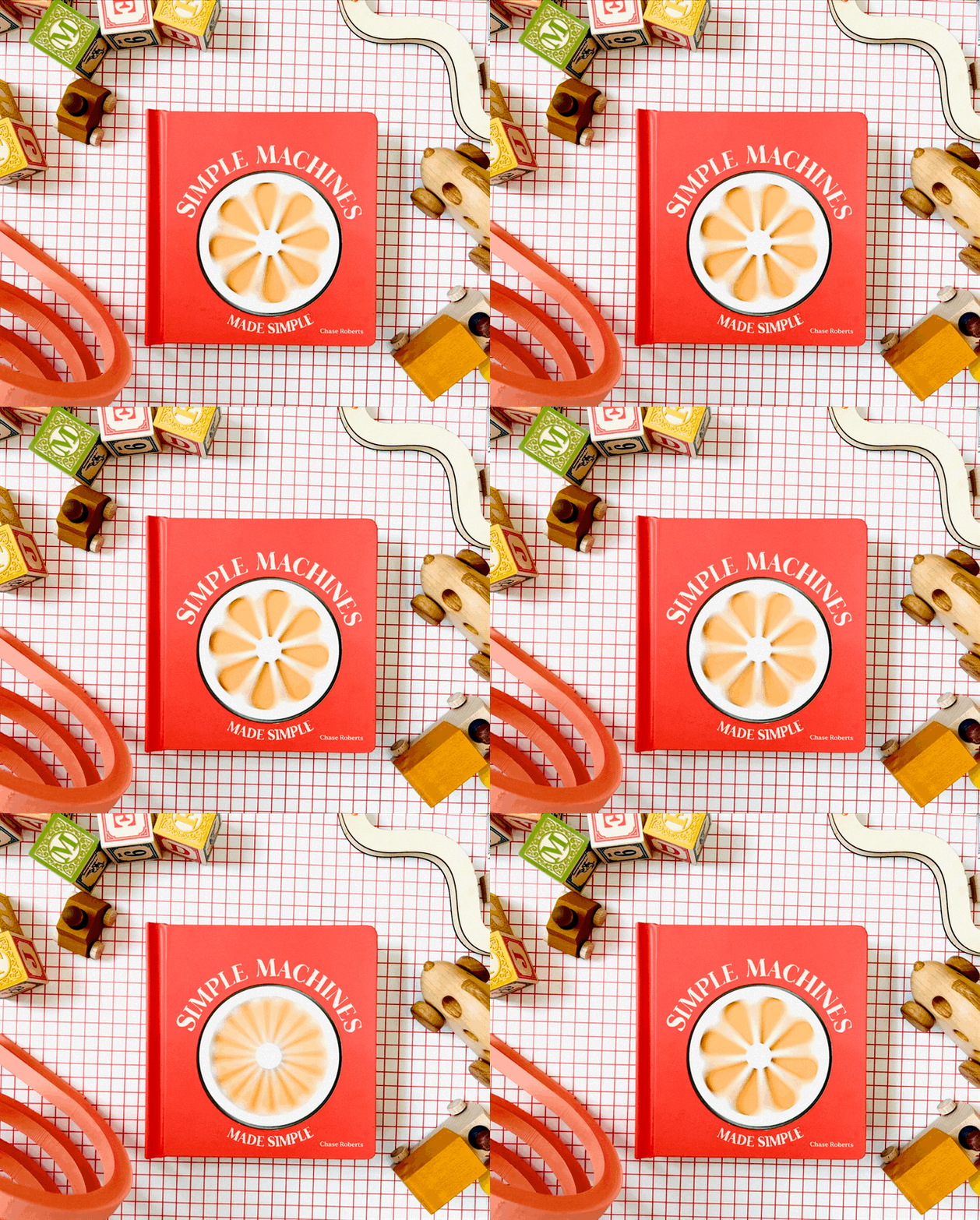
Simple Machines Made Simple is an elegant masterwork by Chase Roberts.
This blocky little book contains six physical examples of mechanical devices that make work easier.
But you don’t really have to understand any of that to be instantly drawn to Simple Machines Made Simple.
Each two-page spread presents a device for you to use: spin the wheel, for instance, or push down the wedge. On other pages, you can pull a lever or tug a pulley.
The text is limited to a short list of applications with each device, such as “Catapult, Scissors, Door Handle.”
This is not a book to make you learn anything. The education here is all experiential and intuitive. At the very least, Roberts says on the back, “The next time you’re on a slide, you can appreciate how much more fun it is than falling out of a two-story window.”
Roberts painstakingly designed this book himself, and he’s handling his own distribution, which is a complicated machine made complicated. He’s requisitioning thousands more copies from overseas as he receives additional orders (details).
I hope he sells so many that he must use an Inclined Plane to move them onto trucks.◆
This Week’s Poem
Joshua Bennett is a trenchant literary critic who also writes deceptively conversational poems that can break your heart before you realize what’s happening.
A Guggenheim Fellow and a Whiting Award-winner, Bennett is currently the Distinguished Chair of the Humanities at MIT.
Physical Education
For the sake of argument, let’s say
the day my father outlawed all contact
between backhand and face, back
-side and belt, stiletto cast like a harpoon
across the living room’s auburn length
and the protagonist running toward the opposite
door, was a Thursday. And let’s say the logic
of his claim went that if he & everyone else
in the house could hit me then, while I was still small,
I would one day grow to be a bomb like so many
brothers he’d seen held up & buried for tempers
flaring in open air. A beating now would be a book
-mark in my memory’s eye; a black mark on the calendar
I kept inside; a day he would be made to meet me
in the square. Every little boy’s brain keeps score. And who
among us hasn’t been held, helpless, before? At the feet
of mercy or underneath them. From that day forward,
I was counters to every command, a conflagration
of untamed language, now detached from a program
of corporal might. The lesson took. I was tall as a man
the next time my father and I shook the house with
our rage and shame. We breathed like dancers,
and allowed our hostility to take its form,
my teenage fists honed in the outside world
where no one loves you enough
to let the boy back up when he loses,
grant him a moment to shake the dust,
knuckle up, try his luck, again.
From “We (the People of the United States),” by Joshua Bennett, published by Penguin Books, an imprint of Penguin Publishing Group, a division of Penguin Random House, LLC. Copyright © 2026 by Joshua Bennett.◆
The Writing Life
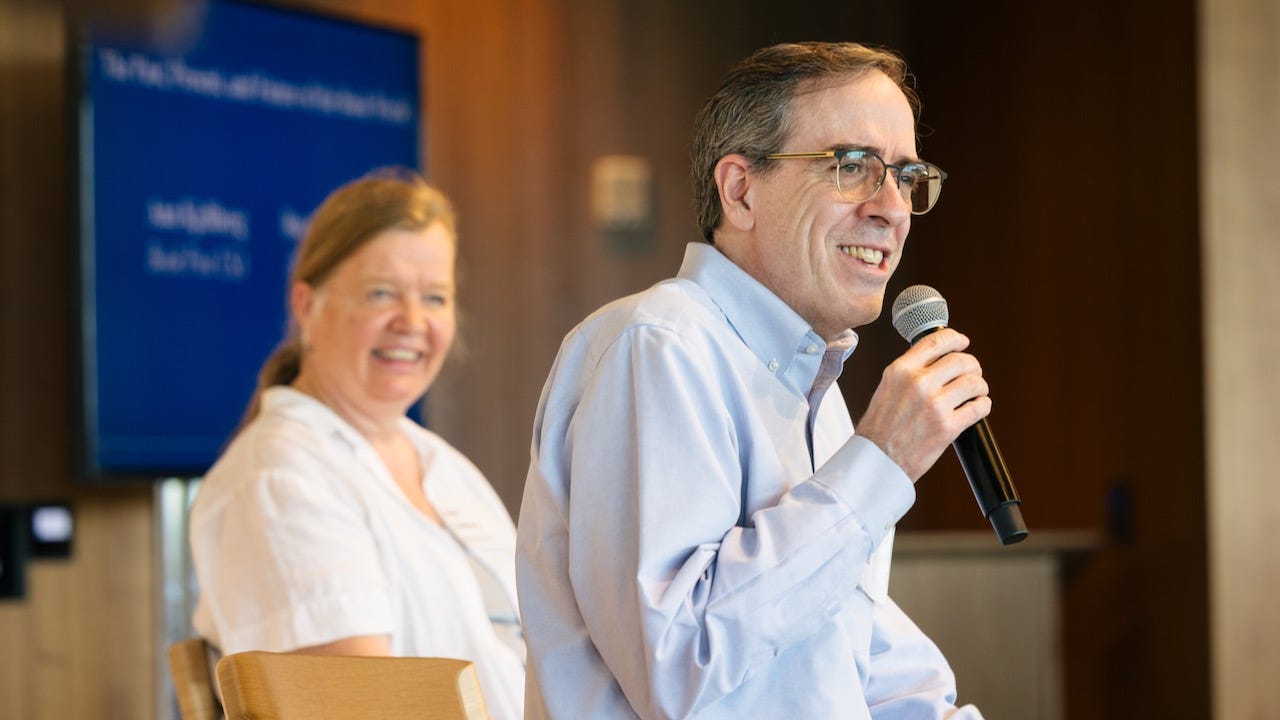
Fourteen years ago, I spent three days with 80 people in Menlo Park, Calif., hashing out how Kepler’s Books could be reinvigorated.
The celebrated store — founded in 1955 by peace activist Roy Kepler — needed a new plan to remain viable. The owner, Praveen Madan, was pursuing an innovative structure: a for-profit bookstore supported by a nonprofit sister organization that would handle author readings, community outreach, and literacy programs.
For me, last Friday was a reunion of sorts.
As part of its ongoing effort to improve the long-term sustainability of indie bookstores, the Emerson Collective brought together representatives from about 50 stores that are pursuing some kind of nonprofit model or hybrid arrangement.
You can read more about this important work in an essay by William Ames in the Stanford Social Innovation Review.
During the conference in Washington, I had the pleasure of speaking with Ann Kjellberg, the founding editor of Book Post, about the past, present, and future — yes, there is one! — of book reviewing.
Clippings
This week’s review is Rasputin Swims the Potomac, Ben Fountain’s prophetic satire about President Trump joining forces with a miracle-working wrestler (review).
Debut authors took home both Women’s Prizes last night in London. Virginia Evans won the fiction award for The Correspondent. BBC chief international correspondent Lyse Doucet won the nonfiction award for The Finest Hotel in Kabul: A People’s History of Afghanistan. Each prize is worth about $40,000.
Sing the 50 United States!, by Dr. Seuss, debuted at No. 10 on the Children’s bestseller list. The manuscript for this little book to teach kids the names and geography of the states was discovered last year in the archives of the Geisel Library at UC San Diego. Tom Brannon completed the Cat in the Hat illustrations based on Geisel’s notes (video).◆
My Friday is complete…..you’ve posted another wonderful newsletter with so much info.
Thank you!
Of course I appreciate the substance of your reviews, but I look for and enjoy the nuggets like “drifting back into the medieval vapors”.
That quote by Mike Johnson, the Squeaker of the House, needs to live in infamy along with Kelly Ann Conway’s “ alternative facts”.