What Success Costs
In “American Han,” Lisa Lee charts how an immigrant family’s ambition poisons them all

The Tuesday Review
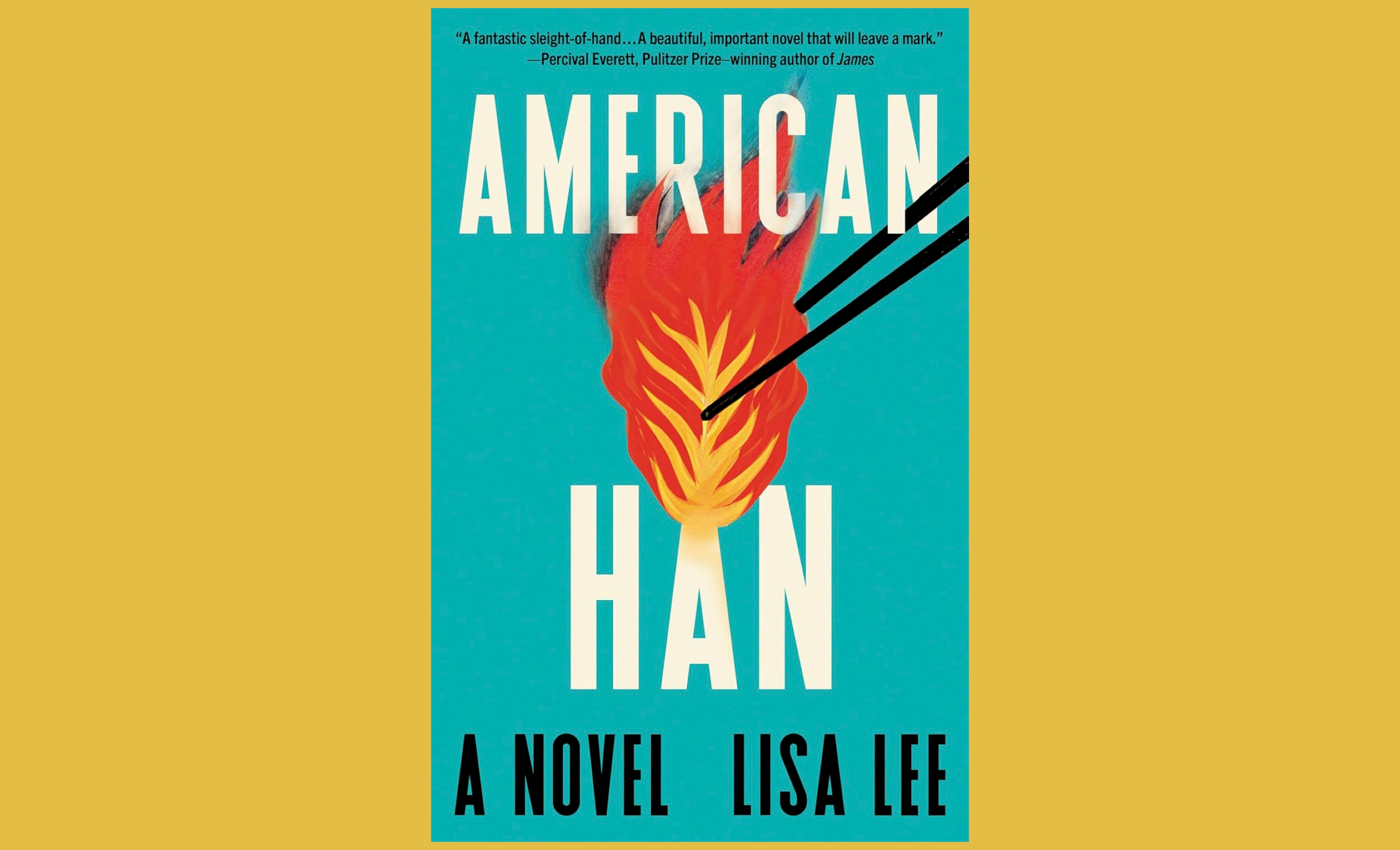
Fifteen years after Amy Chua popularized the Tiger Mom, that stereotype still claws at our cultural imagination.
Chua’s memoir, which unleashed a flood of contentious op-eds, described raising two children under fanatically demanding standards as a corrective to too many parents’ misguided indulgence.
Echoes of that ferocious maternal presence growl through Lisa Lee’s debut novel, American Han. The narrator is a young woman named Jane, whose tightly controlled life of mastery and success has started to fray. She speaks in bewildered agony, like a trauma victim clutching at rules to keep anger from consuming her.
When the story opens in San Francisco in 2002, Jane is slowly failing out of law school — not because she can’t handle it (there’s nothing she can’t handle), but because she’s been skipping classes. She applied only to satisfy her Korean parents, but years of following their dictates have finally pushed her to rebellion. It’s a cramped act of rebellion, though, the careful, wary negotiations of a woman stunted by relentless criticism.
The real art of American Han lies in the circuitous path this narrative follows, as though Jane is learning to trust us just as we’re learning to trust her. Although almost every chapter begins by announcing its date, those designations mask Lee’s subtle manipulation of time and memory, the way experience creates — and later justifies — impressions. Jane knows the scarring endpoint of her confession, but watching her arrive at it and extract some wisdom from it is the novel’s quiet power.
“We’re not the kind of family that addresses bad feelings from the past,” Jane notes, which is to say they’re not so unusual. But clearly, the conflicts they endured were more extreme than most suffer.
When Jane was a girl, her mom never missed an opportunity to remind her how spoiled, useless, and disappointing she was. “She used to tell me that she got nothing out of being my mother,” Jane remembers. She once told Jane she’d given her cancer by being such a bad daughter. When her father beat her with a golf club, her mother didn’t try to stop him; she merely screamed, “Not her face!” lest the neighbors notice.
Lee doesn’t dramatize these moments so much as let them accumulate, each one shattering Jane’s ability to reconcile what happened to her.
It’s a lot for a girl to take in. It’s a lot for a reader, too.
Even so, at the start of the novel, Jane’s caustic mother seems harmless, if batty. She descends on Jane’s apartment with a flyer for an open house, speaking in looping questions that suggest a mind unmoored from ordinary conversation: “What do you think?” she asks. “Do you like it? Do you think I could live there? Does it look small?”
“Don’t you think I should have that house?”
“I’ve never been alone before. How do you do it? Will you help me?”
This onslaught of questions is the first demonstration of how brilliantly Lee writes dialogue, with all the baffling non sequiturs and missed connections we take for granted. But for Jane, her mother’s unhinged prattle betrays a deep disruption. Something has happened to them all. “There were so many missing pieces,” she thinks. Keeping her mom out of her life has become a habit of survival, and yet here she is, now in her 60s, even more erratic, even more likely to offer a sweet compliment wrapped around a hard pit.
“It must be fun,” she tells Jane. “You can do whatever you want. It’s because of me. I raised you. I’m your mother.”
True, but.
What Jane gradually pieces together is a history shaped by parents determined to push their children into the swift-moving stream of American success. It’s a tragedy of almost bottomless torment, all the more painful for its waste and futility. But despite Jane’s wholly justified grievances, American Han rarely sounds like a wail of complaint — or not for long. Instead, it’s a desperate effort to understand her parents, to grasp the frustration and the fury they must have felt trying to navigate a thicket of condescending expectations and resentments. And given the sacrifice — the regime’s retaliatory murder of relatives back in North Korea — how could they do anything but succeed in America?
I asked Lisa Lee how she balanced anger and empathy when writing these parents.
Jane smells that sweaty effort to impress in her parents’ move to Napa, where they buy a fancy house and strive to look rich. “Being the best was very important in our family,” she writes. But even as the trophies pile up — and White neighbors envy her “natural” talent — she just wants to have fun. “There was nothing in-between winning and quitting,” she writes, “an agony that I wouldn’t wish on anyone.”
That touch of self-indulgence is deftly handled by Lee. As the novel progresses, we come to see how Jane’s sense of her own suffering, though real, has largely blinded her to her brother’s predicament. Despite all the privileges heaped on their only son, Kevin, he can never satisfy his parents’ expectations, and the toxic teenage culture constantly questions his worth, his talent, and his masculinity.
Even as Jane learns to separate herself — physically and emotionally — from her parents’ withering criticism, Kevin grows angrier and more frustrated. His bottled fury gradually becomes the novel’s fuel, propelling the story toward a dreadful climax.
By the end, the worn language of the Tiger Mom and her model children feels wholly pernicious. Lee has torn that caricature apart to expose the way it distorts our impressions of immigrants and poisons immigrant families, curdling love into cruelty and sharpening ambition into fear. What looks initially like another story of immigrant striving turns out to be something more unsettling — a family struggling with pain that only one of them can articulate.◆
American Han, by Lisa Lee (Algonquin, 288 pp., $29)
Last week’s review: The Divorce Revolution Comes to Suburbia
Cynthia D’Aprix Sweeney’s “Lake Effect” traces the upheaval — and the joy — after two marriages fall apart.
Have you seen the essay in today's New York Times: "The Life-Changing Power of a Book Review Before Algorithms: How the WaPo's Now-defunct Book World Transformed the Careers of Two Giants of American Literature"? I'm attempting to post a link here in hopes it bypasses the paywall.
Ron, have you thought of writing a novel or memoir? I'd buy it, even with no review!
https://www.nytimes.com/2026/03/24/books/review/larry-mcmurtry-annie-proulx-jeff-bezos-brokeback-mountain-lonesome-dove.html?unlocked_article_code=1.VlA.xkAL.lyRjRyNmSpUz&smid=url-share
Thank you, Ron, for another wonderful review. It makes me want to push all of the other books off my night stand and set this one in place instead.
I like the way you review, with a light and thoughtful touch, pulling out elements of the plot that are good signposts for us as we read through the book.