Americans Don’t Need Saving from Their History
Trump's attack on the Smithsonian is an affront to our intelligence.

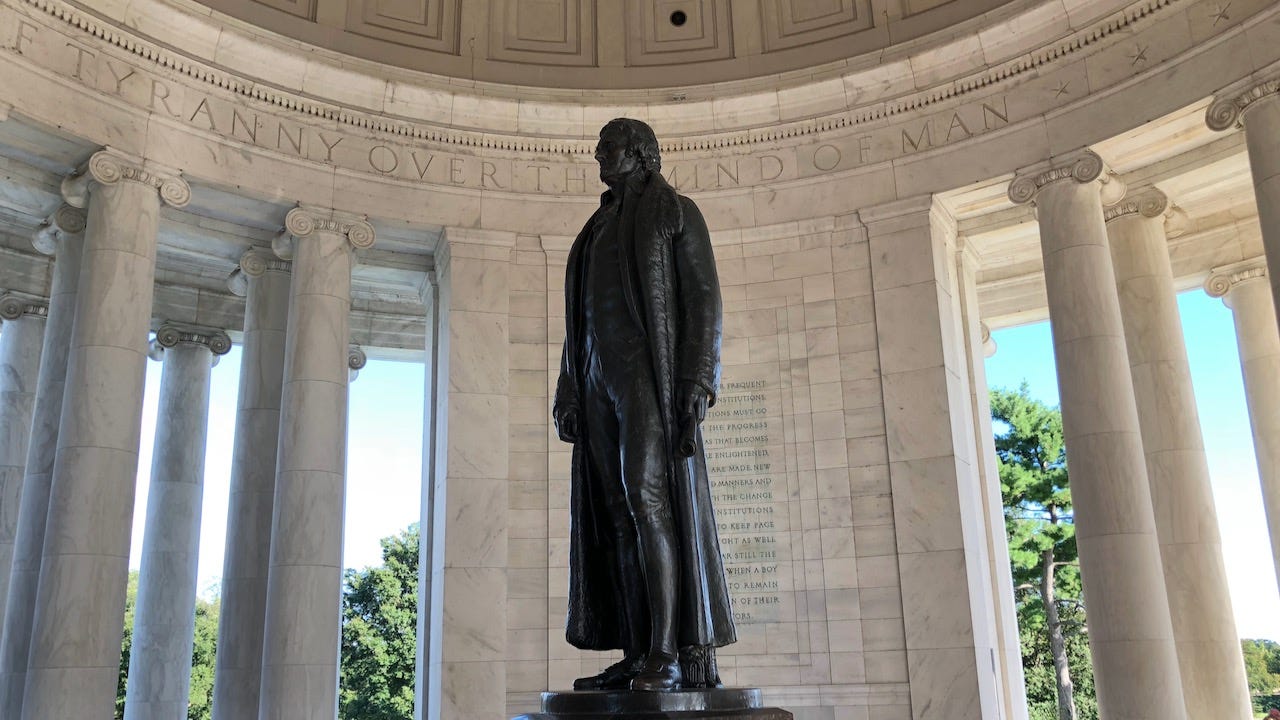
Last Friday, between bombing Iran and bombing at the Correspondents’ Dinner, President Trump issued an executive order requiring warning signs outside the Smithsonian National Museum of American History.
The placards are necessary, Trump claimed, because a council led by one of his former speechwriters has found that the Smithsonian is not celebrating American history with “honesty and gratitude,” qualities dear to the president’s heart.
“Saving America’s Story,” a report by the White House Domestic Policy Council, is about as deep as the Lincoln Memorial Reflecting Pool and just as leaky. Although the anonymous authors characterize it as the product of a “monthslong investigation,” their alleged discoveries merely confirm the fever dream that has long aroused right-wing culture warriors.
The suggestion that Trump cares a whit about museums or anyone else’s history is, of course, ludicrous. But burning down the Smithsonian is an effective bit of political theater to cheer the faithful between $65 fill-ups.
Though tarted up with hundreds of footnotes, the report evinces scant awareness of reputable historians, major works of history, or developments in scholarship. Instead, like a MAGA health influencer who did his own vaccine research, the writers natter on about the Smithsonian’s “ideological agenda.”
“The Museum purposely presents America as a problematic country,” the report complains, “irredeemably conceived, founded by deeply flawed men, and still operating today as an instrument of systemic racism and oppression.”
I suppose they’re three-fifths right.
And wouldn’t you know it, the museum’s intellectual framework is “rooted in Marxism.” Нас разоблачили, товарищи!
The president’s loyal propagandists are particularly alarmed that the Smithsonian contains examples of “activism”; in various forms, the word appears more than 70 times in the report but never with any ironic awareness of the authors’ own activist agenda.
Taken together — if anyone could possibly endure these 162 pages of leaden certainty — “Saving America’s Story” is a proud rejection of intellectual rigor and historical nuance. National pride is promoted as the central, though weirdly fragile, American virtue, one that must be vigilantly defended against any historical complications, questions, or counterexamples.
To accept this alarm is to assume that museumgoers lack the critical capacity possessed by the report’s authors. Americans, particularly our young people, must be reeds blowing in the winds of indoctrination, either toward the light of patriotic truth or the darkness of “intersectional critical theory.”
The saddest implication of “Saving America’s Story” is that the best story is the story that’s already known. In that mindset, federal museums exist to confirm familiar notions of national identity rather than to broaden citizens’ understanding of their history and inspire richer engagement with it.
In a typically measured response, Lonnie Bunch III, the first African American secretary in the Smithsonian’s 180-year history — a coincidence, surely — sent the staff an email saying, “This report is not a fair characterization of the work and totality of the National Museum of American History. At the Smithsonian, our work is driven by scholarship, accuracy, and an uncompromising commitment to tell the fullness of America’s story.”
As ever, complexity is anathema to authoritarian regimes. Despite the Council’s claim that the Smithsonian should tell “a basic consensus view,” there is no such view soaring up like a marble monolith on the National Mall. In e pluribus unum, the many are as important to cherish as the one.◆
The rest of the newsletter follows below.
Books Go to the Movies
Christopher Nolan’s blockbuster adaptation of The Odyssey has sent the popularity of Homer’s 2,800-year-old epic soaring. Bookshop.org reports that sales of all editions are up 15-fold since last year. Emily Wilson’s 2017 translation rose to No. 2 on the site’s bestseller list, though she’s no fan of the movie. In The London Review of Books, Wilson skewers Nolan’s adaptation as mercilessly as Odysseus dealt with the Cyclops.
The Samurai and the Prisoner, starring Masahiro Motoki, is playing in select theaters (trailer). The film is adapted from Honobu Yonezawa’s 2021 historical mystery about a 16th-century warlord who must solve a series of murders inside his castle.
Willy Wonka & the Chocolate Factory, starring Gene Wilder, returns to select theaters on Aug. 2 and Aug. 5 to celebrate its 55th anniversary, which cannot be true (trailer).◆
“Some things could not be conquered with words.”
I’ve never forgotten the galvanizing effect of reading Claudia Rankine’s Citizen, an intimate prose poem about the lived experience of racism. It made me feel alert and hesitant in the way one anticipates a static shock.
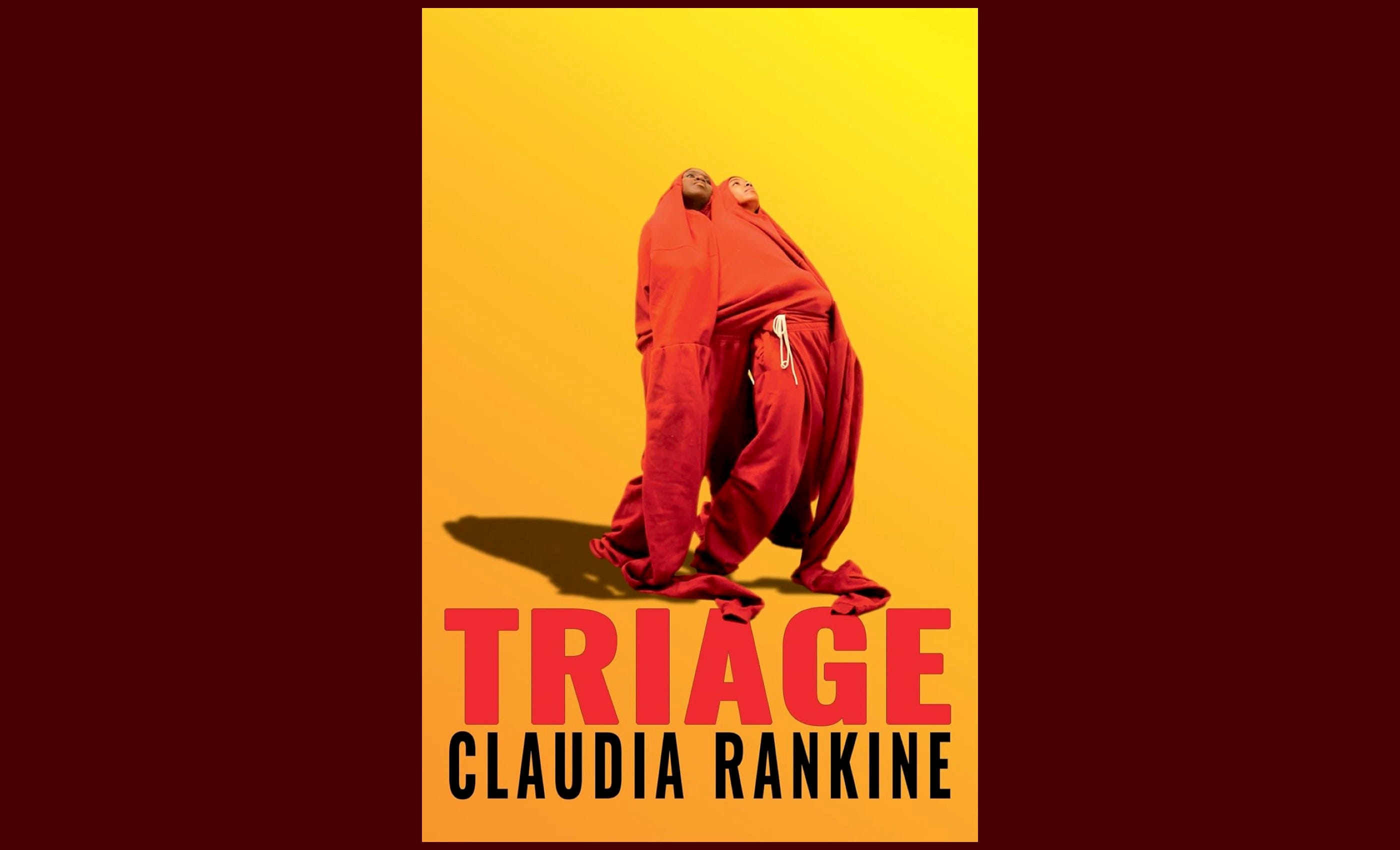
Her new book, Triage, is, if anything, even more startling. It’s a memoir or a novella or maybe another prose poem — Rankine has never given categories any quarter — about enduring in a world that cannot be endured.
It’s fundamentally a book about a complicated friendship forged in college with someone she refers to only as the theorist. Early on, they establish their own strange form of greeting on campus:
“When we spied the other during the day, we had to collapse,” Rankine writes. “The collapse was literal and, on occasion, an inconvenience to those around us.”
What might look like a bit of sophomoric melodrama is, in fact, a way to keep from breaking, to keep refusing — an echo of the protester’s passive resistance or an allusion to Antigone’s preparation to be buried.
“The collapse was an antidote to an unbearable but borne disturbance we glimpsed in the face of each other. At last, here was another who embodied the expression of our puzzling predicament: Another life brought up to endure, not live, the harsh weather the seasons would not own.”
As the book progresses in a series of stark segments, Rankine keeps rolling that act under her tongue, drawing out the various meanings of collapse in the face of racism, genocide, environmental destruction, the death of her mother, the “toomuchness of now.”
Throughout, flashes of wit feel almost too profound to inspire a smile. Decades later, in her 60s, Rankine trips on the curb on her way to mail a letter to the theorist. When she wakes up in the hospital, she thinks, “If only triage existed before the collapse.”
Laced with photographs — mostly of couches, upon which one might collapse — this is a book of piercing insight, strangely intimate and analytical, with a vision alternately personal and global.
Rankine writes that her friendship with the theorist became essential to her “by a sleight of hand.” By the same magical dexterity, this unfathomable book amazes and perplexes in equal measure.
“I told myself it was ridiculous to try to use language like it was a couch,” Rankine writes, “even though the couch doesn’t assume we are okay in the end. It’s a rest stop in the midst of despair.”◆
(N)one Ringy Dingy
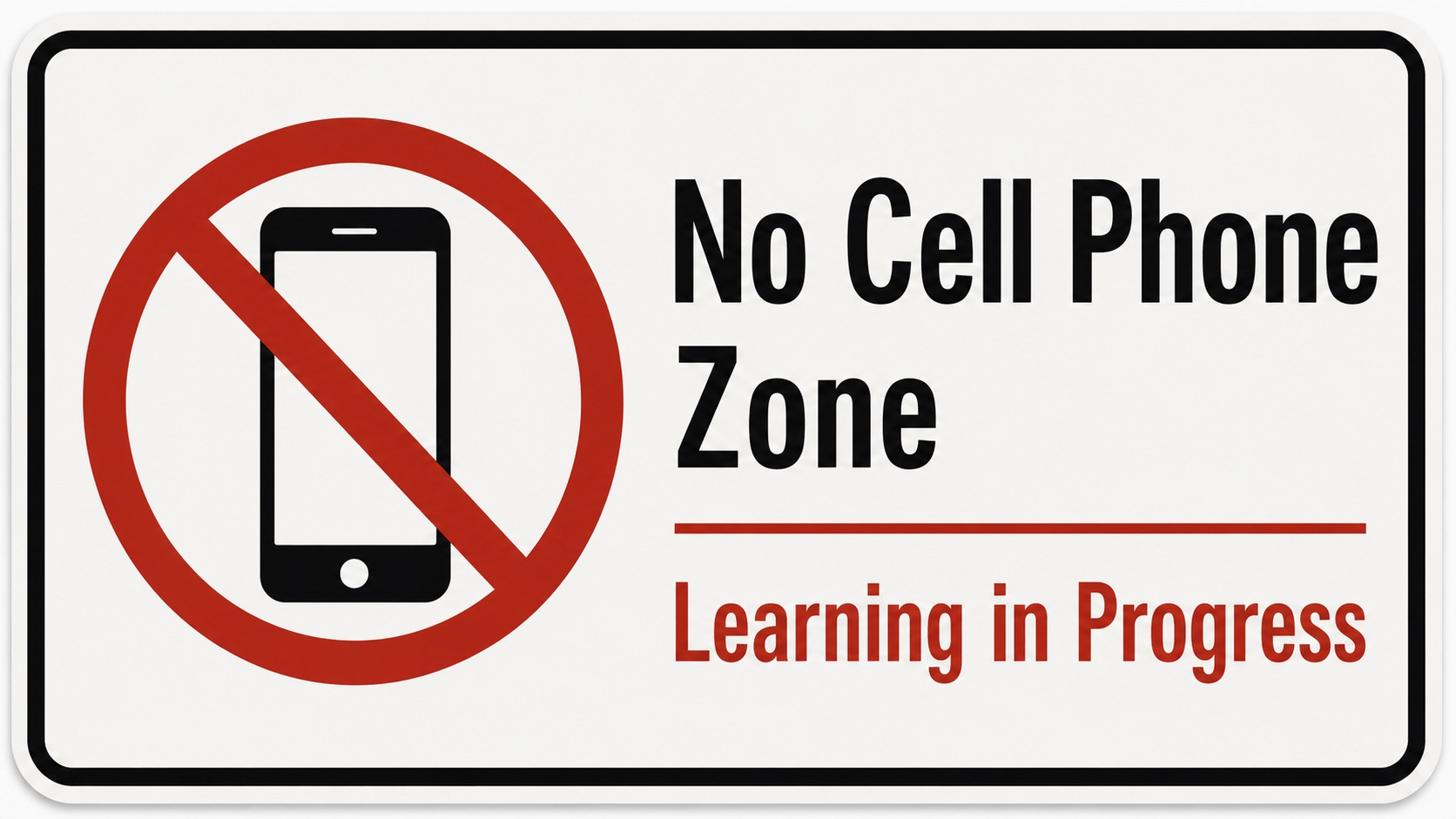
My wife has less than a month left until school starts — a fact I’m forbidden to mention in her presence — but there is some good news: Her district plans to ban cell phones throughout the day for all students.
Last year was the first year her school effectively banned cell phones in the classroom, and Dawn said the benefits were striking: Students actually talked to each other, paid more attention, and even looked her in the eye.
Such cell phone bans are spreading fast, as more and more parents and administrators heed the concerns raised in books like Jonathan Haidt’s The Anxious Generation. A majority of states now have laws or statewide policies restricting cell phones in classrooms.
And new data from School Library Journal echoes my wife’s experience.
A SLJ survey of almost 900 school librarians and teachers found that 68 percent of them saw benefits, such as more engagement with books in the classroom, more independent reading during free time, and even higher library book circulation.
Some schools also noted “fewer disciplinary issues, less cyber bullying, and fewer students contacting parents because of anxiety or seeking to leave school early.”
But the SLJ survey highlighted a clear warning, too: Everything depends on how effectively the policy is enforced. As my wife found in the early days of her school’s “no phone policy,” placing the burden on individual teachers is a losing proposition. “The most successful policy is bell-to-bell, with phones put away in lockers or security pouches,” writes SLJ reporter Kara Yorio.
There are drawbacks, of course. Students reading ebooks on their cell phones are out of luck, and for safety reasons some parents insist on being able to contact their children anytime.
These stricter policies could revive old classroom management challenges, too. My wife remembers going into classrooms full of students all sitting quietly staring at their phones. No noise. No disruption. No discipline problems.
How scary is that?◆
The Booker Dozen
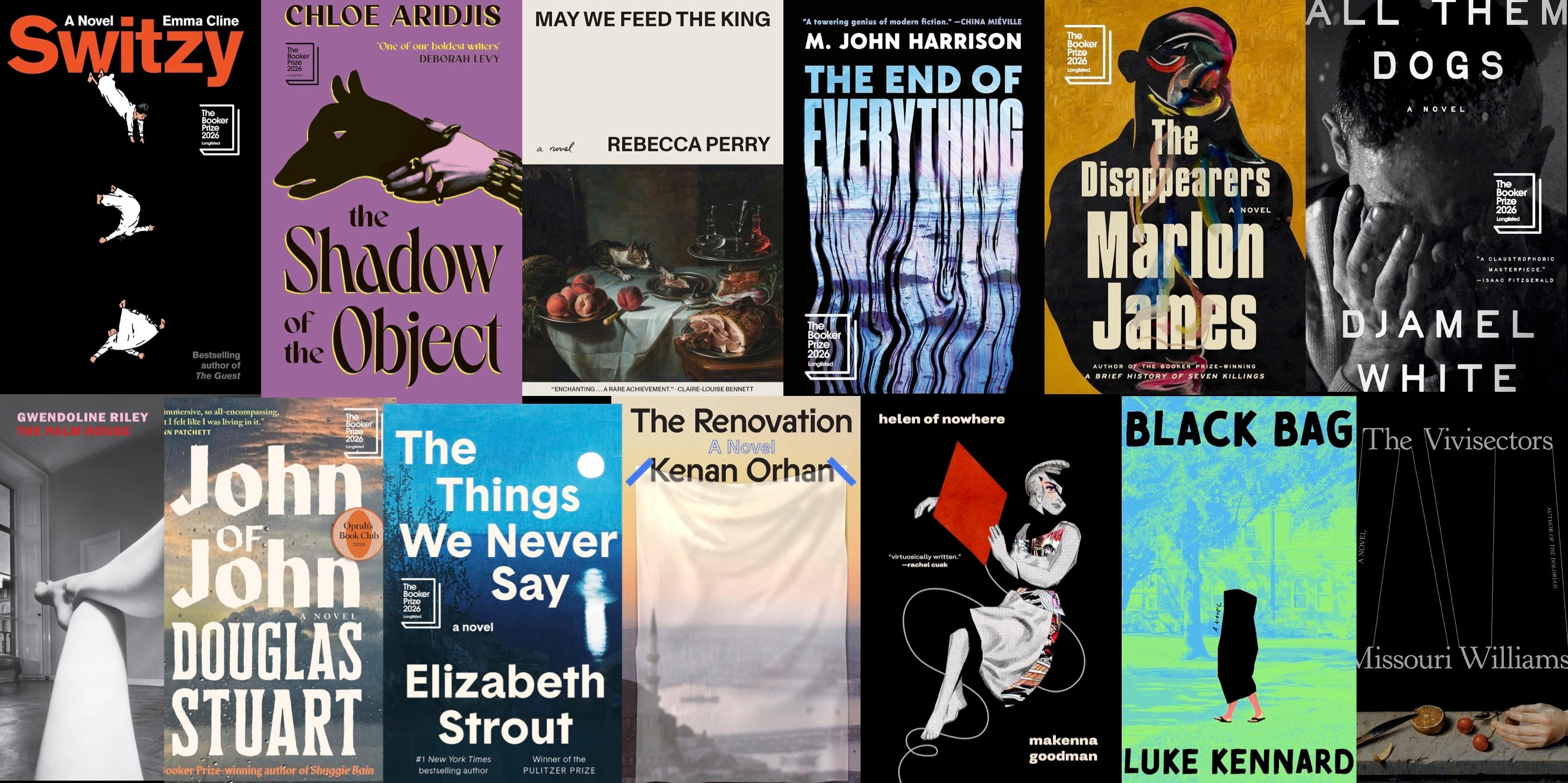
Two novels I’ve loved this year are on the Booker Prize longlist: Elizabeth Strout’s The Things We Never Say and Douglas Stuart’s John of John.
Stuart won the Booker in 2020 for his debut novel, Shuggie Bain.
Another author contending for a second Booker is Jamaican writer Marlon James. His longlisted novel The Disappearers, about the murder of an actor in a gay theater troupe, will be published in the U.S. on Sept. 1. He previously won the prize in 2015 for A Brief History of Seven Killings.
(Only four writers have ever won the Booker twice: J.M. Coetzee, Peter Carey, Hilary Mantel, and Margaret Atwood.)
For decades, the Booker Prize restricted itself to authors from the UK, Ireland, and the Commonwealth, but that rule fell away in 2014. Now the longlist regularly includes a sizable contingent of Americans, which I think is too bad, but that’s water under the London Bridge.
The Booker judges note that Chloe Aridjis, author of The Shadow of the Object (forthcoming Feb. 23), would be the first author of Mexican heritage to win the prize, and Kenan Orhan, author of The Renovation, would be the first writer of Turkish heritage. (You can read the genesis of his novel in The Atlantic.)
It’s foolish to draw any trends from a single year’s longlist — he said, as he prepared to draw one. But it’s striking that six of the 13 books on the longlist are under 250 pages. (The shortest — Makenna Goodman’s Helen of Nowhere — is just 141 pages.) Is the Distraction Economy reshaping literary prestige?
(For the record, I have nothing against short novels; in my panicked line of work, I prefer them.)
I’m particularly charmed by the age range on this longlist, from 28-year-old Djamel White, for All Them Dogs, to 81-year-old M. John Harrison, for The End of Everything, forthcoming Oct. 13.
The Booker Prize shortlist will be announced on Sept. 22, and then the winner on Nov. 9 in London. Pubs will be crammed with excited readers betting on the big reveal. Just like in America. <sigh>
The prize is worth about $67,000, though the worldwide publicity and sales are considered even more valuable.
P.S. Speaking of driving sales: Barack Obama has released his summer reading list. Among his recommendations are Ann Patchett’s Whistler, Colson Whitehead’s Cool Machine, and Tayari Jones’s Kin, which Dawn just started.◆
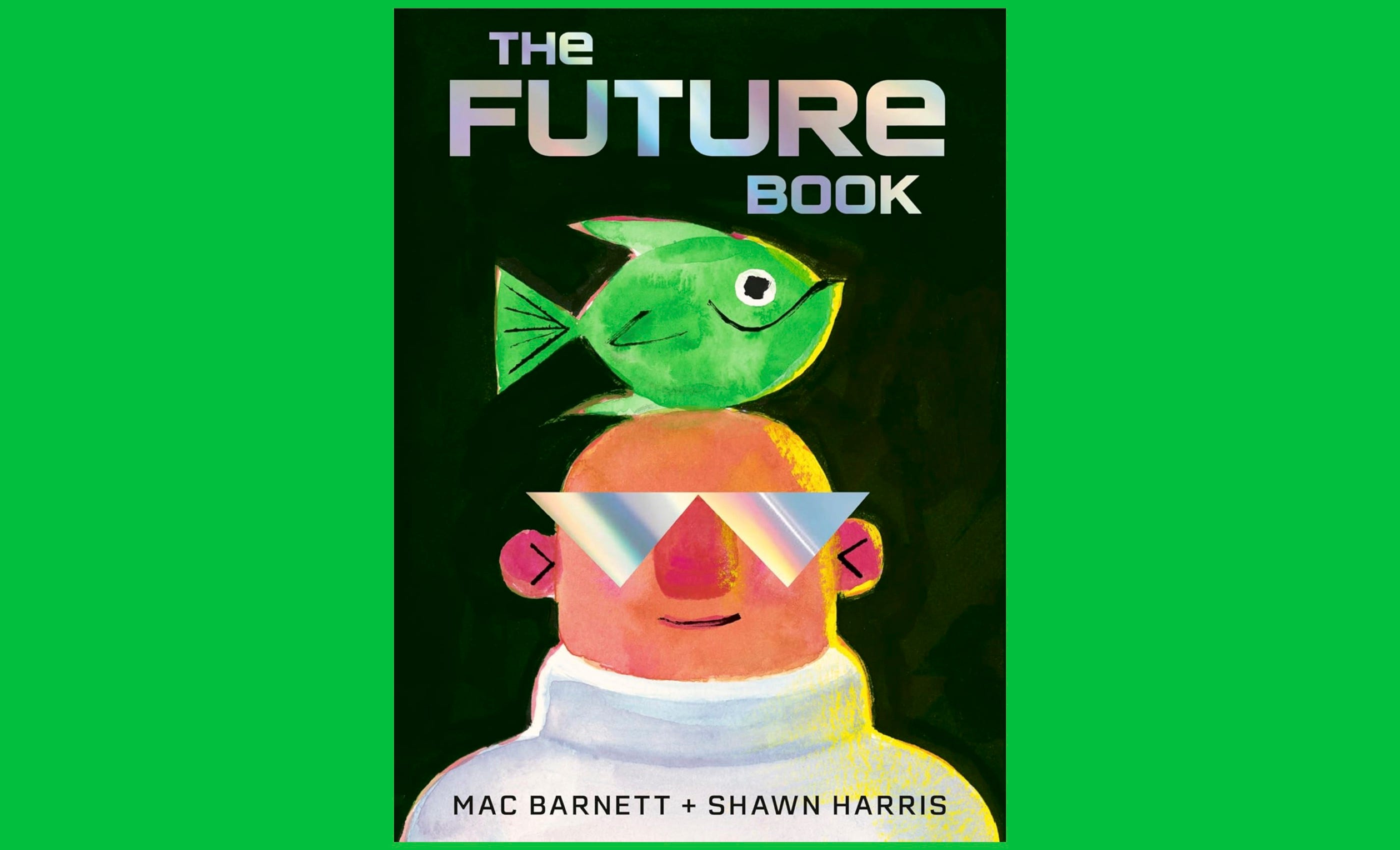
Picture This
With The Future Book, two of the cleverest children’s book creators soar hilariously into the great unknown.
According to National Ambassador for Young People’s Literature Mac Barnett, the future is a time of linguistic chaos.
“In the future, the sun is called the moon,” Barnett writes, “and the moon is called the sun.”
Night and day, apples and bananas — they’ve all been gloriously scrambled, but that’s just the start. Even the most ordinary expressions have been revised.
“We don’t say ‘Goodbye!’ We say ‘You smell like a baby!’”
Shawn Harris’s deadpan illustrations — created with ink and gouache, “which means something totally different in the future” — make witty companions to the text throughout.
To say “thank you” in the future, people place a fish on someone’s head.
“There’s an interesting reason why,” Barnett says offhandedly, “but we don’t have time for that story.”
Instead, this delightful book charges ahead until we arrive at a breathless dialogue of nonsense that’s sure to inspire similarly silly declarations by a little one in your house.◆
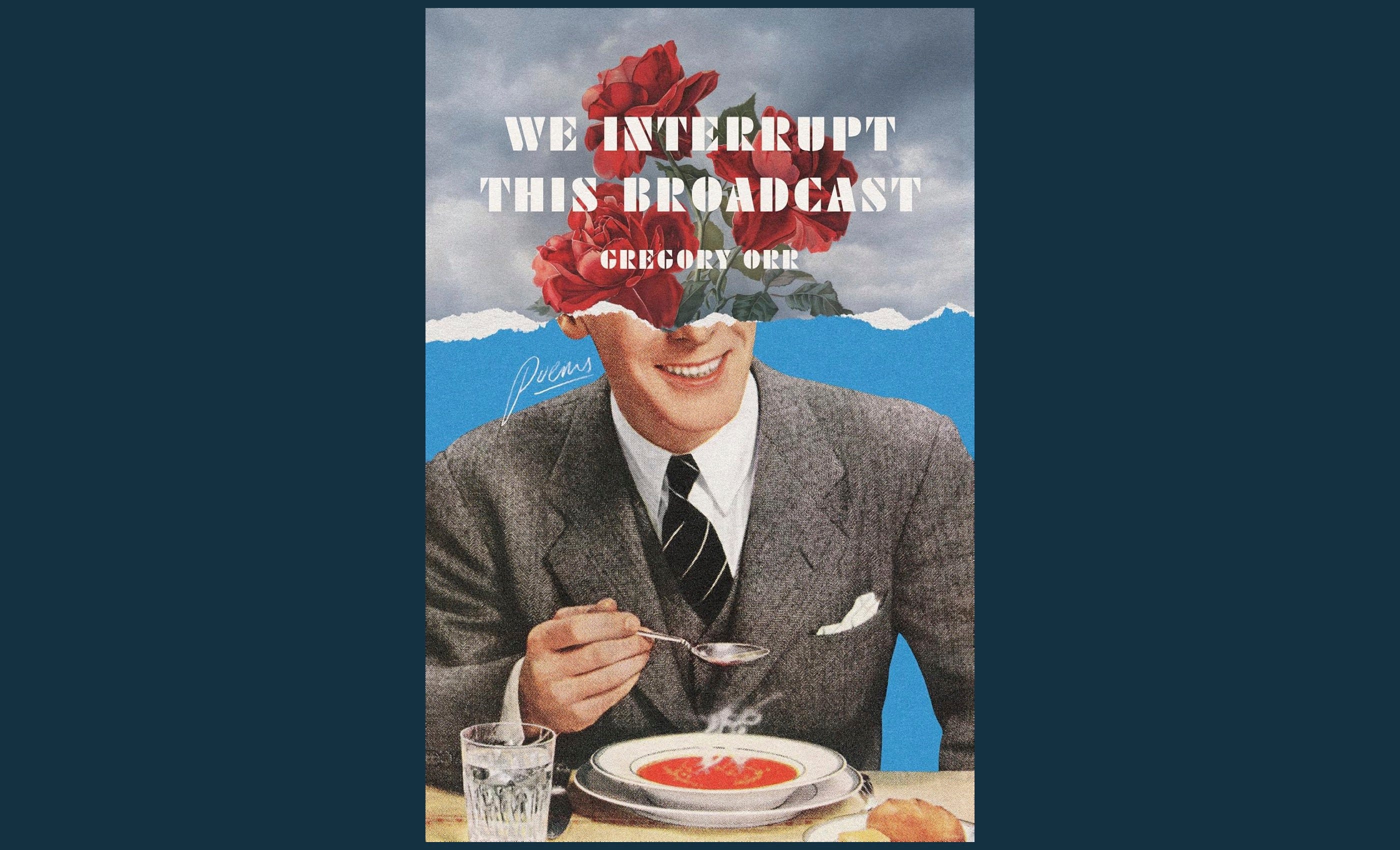
This Week’s Poem
Gregory Orr has been one of America’s essential poets for decades. Across more than a dozen collections, starting in the early 1970s, he’s plumbed the depths of his own life with such sensitivity and wit that readers have understood their own lives more clearly.
His latest collection, We Interrupt This Broadcast, looks back without an iota of sentimentality but with the same brave candor fans have long adored.
“I’m so old now,” he says in one poem, “I don’t even / Have to stand tip-toe / To see over the final edge.”
At the end of a long poem titled “Pedagogy of Trauma,” he concludes by addressing his bruises and wounds:
You taught me not all hurt
Permanently harms
And some disasters
May even mask the arrival of grace.
I needed you to complete my education.
In a similar way, many of us need this valedictory collection.
Two Brief Notes to My Alternate Self
Boy, that was a bad idea we once
Had:
       You write one line,
I’ll write the next.
What made us imagine
That could cohere?
No accusations, no need
To blame, but it was
Delusional to think it could work
Or that either of us
Would let the other get the last word.
________
“Another poem is another hope.”
One of us said that
And the other agreed.
No need to close up shop
Just yet
Who knows what might
Come along?
                     Sixty
Years we’ve worked
With words, believing
They could save our life
And keep us both together.
Ploughed that field a thousand
Times, planted the seeds
And waited to see:
                             Sometimes
A harvest, sometimes just beautiful weeds.
Excerpted from “We Interrupt This Broadcast: Poems.” Copyright © 2026 by Gregory Orr. Published by W.W. Norton, Inc. Reprinted with permission of the publisher.
P.S. As When Waking, by Daniel Schonning, won the Four Quartets Prize from the T. S. Eliot Foundation and the Poetry Society of America. The award, worth $20,000, honors “a unified and complete sequence of poems.”◆

Giving a hoot, and getting one
On Tuesday, Dawn and I skipped out of Washington just ahead of a line of wild thunderstorms. Delays were promised at every point, but we made it to my folks’ house in New Hampshire before bedtime.
The only real struggle was hauling around a giant suitcase filled with all the books I might need over the next three weeks. So much anxiety infects that word might. Will I want to write about beavers while I’m here? (If I see one, yes.) What about digital surveillance? (Ask Google.) Not to mention all the children’s books, poetry collections, and novels I’m still trying to select.
I practically paid for my indecision with a dislocated shoulder.
Now I’ve taken over the guest room, and I’m hunched at my old high-school desk where I once pounded out essays about the green light at the end of Daisy’s dock, sometimes solved quadratic equations, and wrestled with matters of theology as though they were a matter of life or death.
Yesterday, having observed me crouch at work for 10 hours, Dawn insisted we go for a walk along the edge of the forest. Almost immediately, a barred owl flapped up from the ground and lit on a branch. We said nothing, but it growled at us. And then flew deeper into the pines.◆
Clippings
This week’s review is Yellow Pine, Claire Vaye Watkins’s smart, sexy, surprisingly hopeful novel about a woman who wants a baby even as the world goes to hell (review).
After infuriating ticket holders by canceling more than a week of preview performances, George R.R. Martin’s Game of Thrones: The Mad King wowed theatergoers on July 28 at the Royal Shakespeare Theatre in Stratford-upon-Avon (tickets, not many).
Today is the birthday of J.K. Rowling (1965) and, coincidentally, Harry Potter (1980).◆
Just brilliant writing. "...between bombing Iran and bombing at the Correspondent's Dinner." And then referring to the DPC's report as "deep as the Lincoln Memorials' Reflecting Pool and just as leaky." Hallmarks of why I love to read everything you write. Bravo!!!
"I suspect they're about three-fifth right." Spectacular.