Hot and Bothered
Claire Vaye Watkins’s “Yellow Pine” is a smart, sexy, surprisingly hopeful novel about the world going to hell.

The Tuesday Review
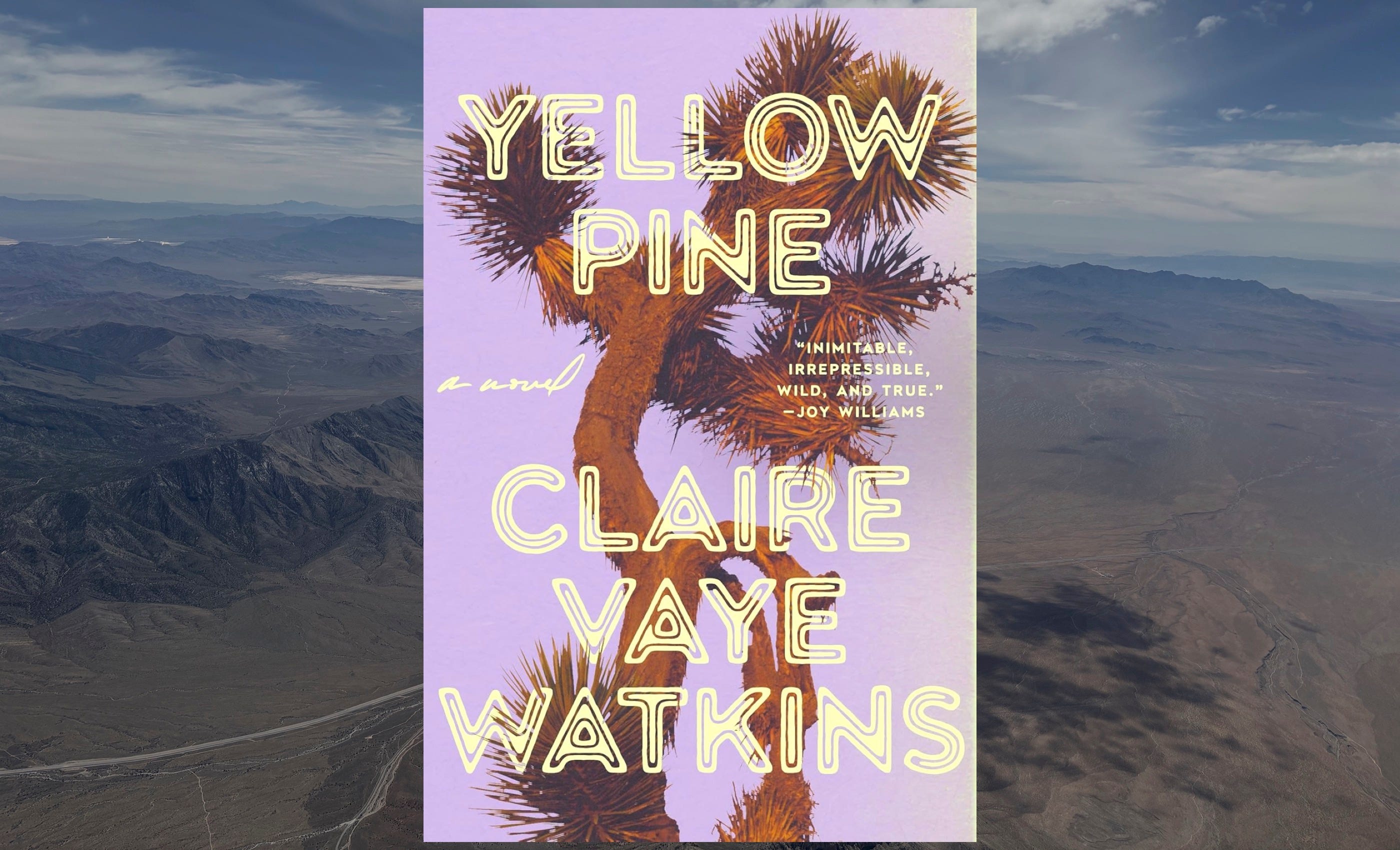
Among the swelling collection of books confronting our imperiled planet, Claire Vaye Watkins’s fiction remains defiantly alive. Her stories and novels are rooted in the American West, that awesome expanse of dunes and deserts that uninformed observers would call empty. Where life has adapted to the damning conditions of heat and drought, Watkins finds characters burned away to their elemental anxieties and desires.
Her new novel, Yellow Pine, is so clearly evolved from her earlier work that any fan could recognize it on a moonless night in Death Valley. But Watkins has never written more confidently or staked so much on her unmistakable voice, which winds through environmental catastrophe, goofy comedy, and sexual obsession. The desert isn’t the only thing that’s hot here — think Miranda July with cacti.
At the center of it all is Rose, a woman sliding toward 40 and growing disillusioned with her work for the Sierra Club. “She felt like a flunky for the nonprofit-corporate-industrial complex,” Watkins writes, “a whipper of frenzy, a vulture, an opportunistic bottler of rage, a hack alchemist attempting with shrieky, automated, and largely ignored emails to transform grief into cash.”
The isolation of the covid pandemic suited her just fine, she thinks, and now she lives in a cinderblock cabin appropriately called Nothingness Flats in Tecopa, Calif. Her thoughts are laced with quotations from Joan Didion, John McPhee, and Lydia Davis. She’d like to imagine she’s “Thoreau in the Mojave.”
“How freeing, how illuminating (in a deeply sad way) to watch pointless obligations slough off like so much dead skin,” she thinks. But her spirit is not really so reclusive, and her desert is more imperiled than Walden Pond. The ancient ground around her is “pulverized evermore each day by bombs, mines, house developments, server farms, so-called fulfillment centers, and industrial solar arrays.”
One of those solar arrays, a real project cynically dubbed Yellow Pine by a Florida-based energy company, is about to begin construction near Rose’s home. The solar farm may promise renewable energy, but in Watkins’s telling it serves the insatiable appetite of new AI data centers. Early in the novel, Rose falls in with a group of like-minded old hippies and environmental activists who begin staging tepid demonstrations against the Yellow Pine development. “It’s not a blockade,” one of them explains. “We’re not delusional. It’s more of a vigil.”
Alas, this is not a cause with panda bears or baby seals to tug at the hearts and wallets of well-cooled suburbanites. Instead, the solar array will destroy thousands of acres of creosote bush, and scores of desert tortoises may die during relocation. Making a case for preserving the desert pavement that maintains the area’s complex and largely invisible ecosystem is a lost cause. And besides, isn’t the green energy gold rush a good thing?
Watkins knows this desert well. It isn’t merely the setting of Yellow Pine — it’s the very model for its plot. Change is hard to spot here. This isn’t a T.C. Boyle climate novel; movement is rare and constrained in these pages, which have the metabolism of a kangaroo rat — a compliment, I promise. Almost everything interesting happens underground.
This is a story about daring to live in the climate of futility. It avoids the polemical tone of some climate-change fiction by interrogating the environmental movement itself. Sitting around their vigil at the Yellow Pine site, Rose and her friends wonder if the National Park System “made it possible for us to completely ruin the rest of the planet.” They scoff at the inanity of recycling, that “tragically effective engine of distraction,” which allows corporations to shift responsibility for the ocean’s health to consumers sorting their plastic soda bottles. And Rose brings a similar skepticism to green energy developments that scrape thousands of pristine acres, drain aquifers, and hand over billions of dollars to the same executives who brought us to this precipice.
I asked Claire Vaye Watkins: “Why does Rose long for a child in a world facing environmental collapse?”
These aren’t lectures. Watkins isn’t freighting her novel with essays — although she’s brilliant in that form, too. (See “The Creosote Sea” in The Yale Review.) In Yellow Pine, revelations bubble up organically, sometimes comically, among Rose and her off-grid comrades sitting around shooting the breeze in the breezeless desert. The dialogue sounds so real I wonder if Watkins’s friends will recognize themselves. It’s a community of sweet folks, artists, scientists, and amiable quacks vibrating between conspiracy theories and misdemeanors, guilty of doing nothing more than trying to save the Earth. One of them is a scantily clad ecofeminist wearing a lizard head. Their bull sessions careen from transmission towers to the Crucifixion to Fritos.
The environmental shibboleth that Rose is most determined to defy is population control. “It was like the weird wrong mole marking the ecofascist tumor that had been metastasizing in the toxic sludge of ‘the climate debate’ for Rose’s entire life.” Why should she — why should anybody — give up on babies, on life, on the future just to keep corporate America from having to pay for its ongoing crimes? Is the only satisfaction left a kind of “Dover Beach” consolation “in a low-key failed state on a dying planet”?
That’s a question Rose keeps debating with herself and an old lover named Miles who pops up like “a carnal magnet.” He’s positively pneumatic in bed. And when he’s not in bed, he’s the kind of dude who reads A Course in Miracles and tells the 40-year-old woman who adores him that he can’t be a father “for a few more moons.” Cerebral, “bafflingly gorgeous,” and chronically unemployed, Miles weeps and claims he’s “afraid of losing himself.” I kept writing “RUN” in the margin, but Rose is hooked, obsessed, driven mad with lust, which few writers can capture with such wit and eros as Watkins. “She aroused herself thinking of all the things he’d quit, first among them her, nearly two decades before.”
How much shorter this book would have been if Rose had put down Slouching Towards Bethlehem and picked up He’s Just Not That Into You. But Rose has hope, despite the dying oceans, despite the rising temperatures, despite even Miles’s infuriating fickleness, and who am I to argue with that — or this sly novel?◆
Yellow Pine, by Claire Vaye Watkins (Riverhead, 256 pp., $29)
Previous review: Cool Machine
Colson Whitehead bids farewell to Ray Carney in a witty, bloody, and unexpectedly moving finale to his Harlem Trilogy.
Dear Ron, Please stop introducing me to fascinating books with your scintillating prose. My bedside pile of To-Reads already threatens to topple and crush me in my sleep. (Just added "Yellow Pine" to my Politics and Prose cart.) More seriously, love your reviews, esp. the mini interviews with authors. I always look forward to your intelligent, humorous, slightly acerbic voice.
Small world -- I have personal experience with the developer of Yellow Pine, NextEra Energy. They are the world's largest electric utility holding company by market capitalization (Wikipedia).
They are in the process of acquiring Dominion Energy:
"NextEra Energy to buy Dominion in a deal that unites two key players in race to power AI data
Centers" (CNBC, May 2026)
https://www.cnbc.com/2026/05/18/nextera-nee-dominion-energy-d-data-center-ai.html?msockid=3a6e2ff5b2d86a9103c53b78b35c6bcd
I am not an author, but during the time I was dealing with one of NextEra's projects, I wished I were. Had I the talent, I could have written volumes about this company's many transgressions.
I hope Claire Vaye Watkins's book becomes a bestseller and, in the process, inspires the conversation that needs to be had about this energy provider.
Thank you so much for this, Mr. Charles.