Buzz Kill
A fascinating new book explores the hidden costs of killing the bugs we hate — and the ones we need.

Every morning after breakfast, Dawn and I take a walk around my folks’ farmhouse in New Hampshire. A red-tailed hawk complains about us from atop a white pine. Dew glistens on goldenrod running down to the covered bridge.
But these days, preparing to enter this idyll feels like dressing for combat. A recent story from The Atlantic begins, “In woods that are lovely, dark, and deep, a many-legged menace now stalks the land.”
Terrifying reports about ticks bearing Lyme disease and mosquitoes carrying West Nile virus are enough to make one long for the underground dystopia of Hugh Howey’s Silo.
Dawn has us decked out in No Fly Zone clothing from L.L. Bean. That sounds like something you’d wear if you’ve been grounded by TSA, but it’s actually a line of apparel pretreated with permethrin, a chemical that repels mosquitoes, ants, ticks, chiggers, flies, and midges. These vaguely safari-esque shirts and pants — 93% nylon, 7% spandex — feel like wearing a Ziploc bag without the sandwich.
Now we stroll confidently through the loamy forest, repelling insects and fashion sense in all directions.
Permethrin is typically described as a synthetic version of the natural insecticide found in chrysanthemums, which makes it seem about as threatening as Valentine’s Day. And if used as directed — both as an insecticide and a treatment for scabies — it’s considered safe.
There’s just one catch: Permethrin is an indiscriminate neurotoxic insecticide. When sprayed on crops — everything from cotton to peaches — it persists on leaves for days and kills bees on contact.
That stings because bees are the tireless laborers upon whose wings much of our food supply depends.
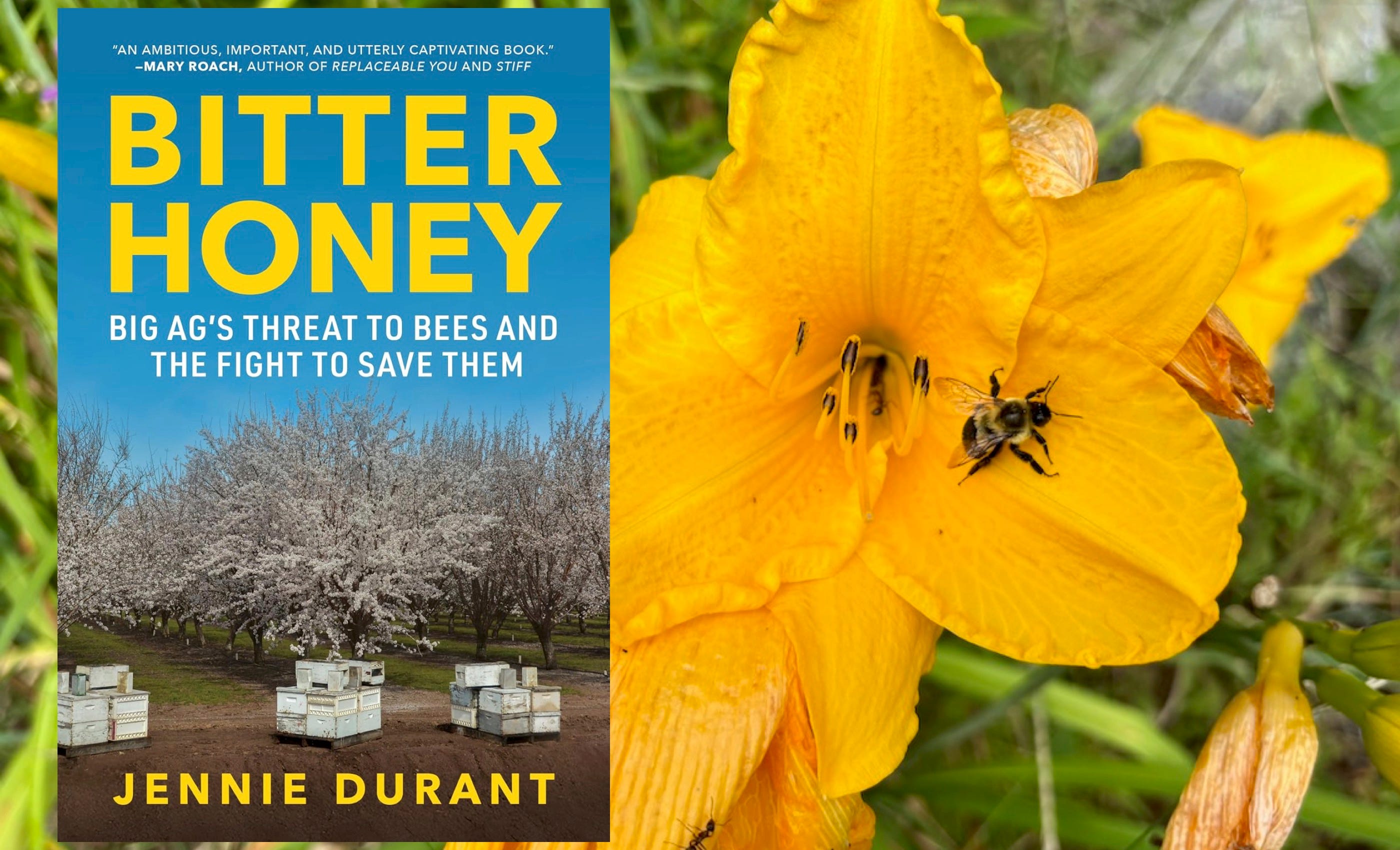
“Today, around 90 percent of the world’s flowering plants and 75 percent of the world’s major food crops benefit from pollination services provided by insect and other animal pollinators,” writes Jennie Durant in Bitter Honey: Big Ag’s Threat to Bees and the Fight to Save Them. “Their decline threatens the stability of our environment, our food systems, and the intricate web of life that depends on them.”
Durant has been studying and writing about bees for years — years of decline. A beekeeper herself, she knows the farmers, the scientists, and these essential insects personally, and the story she tells in Bitter Honey is equally endearing and alarming.
She begins with an extraordinary report about California’s almond growers. Every February, nearly 99 percent of the nation’s honey-producing bee colonies are trucked to the Central Valley to pollinate those almond trees.
This annual pollination event turns bees into “a form of rented labor” with severely limited genetic variety, a development that has stark implications for the insects and the industry.
The result “has deepened bee vulnerability,” Durant writes. Beekeepers are stuck “pushing colonies harder each year, medicating against parasites and pathogens, coping with pesticide exposure inside and outside the hive, and chasing increasingly elusive bee forage.”
Despite the book’s serious subject and wide-ranging research, Durant sports a bright, conversational style and an easy candor about her own involvement in the story. She explores this complicated subject almost entirely through on-the-ground reporting and engaging anecdotes, like the experience of Evan Clay, who lost half of the 500 colonies he brought to an almond orchard when his bees (and he!) were sprayed by pesticides.
One of the many things I didn’t know is the way inert ingredients in pesticides undergo lesser regulatory scrutiny.
“These so-called ‘inerts,’ which are often untested and shielded by confidentiality, can harm other pollinators and beneficial insects essential to the broader landscape,” Durant writes. “Labels may promise safety, but they often ignore the complete formula’s complex and cumulative effects, making all of us unwitting participants in a large-scale field experiment on pesticide toxicity.”
Suddenly, my No Fly Zone Casual Button-Down Shirt feels uncomfortably warm.
But that could be climate change, which, Durant points out, is another factor in the complex nexus of threats bees are facing.
She doesn’t leave us there, though. The final chapters explore solutions like re-diversifying our agriculture and encouraging smaller, sustainable farms.
You can help, too. Embrace chaos! Plant a “rebel garden” that provides sanctuary for pollinators.
“We’re not the center of the universe,” Durant concludes. “We don’t own the butterflies, bees, birds, and rodents that pass through our yards — we are their hosts for a while. And that means we should treat them with as much care as possible.”
I’m not taking off my No Fly Zone pants just yet, but Bitter Honey has set my mind buzzing about the plight of these tiny pollinators our world desperately needs.◆
The rest of the newsletter follows below.
Books Go To the Movies
In Late Fame, Willem Dafoe plays an old postal worker whose youthful poetry is rediscovered by a younger generation of artists who hail him as a genius. The film, playing in select theaters, is adapted from a posthumously published novella by Austrian writer Arthur Schnitzler (1862-1931).
The Shards, streaming on FX/Hulu, stars Igby Rigney as a senior at an elite prep school juggling college applications, vicious cliques, and a serial killer, which could ruin the whole year (trailer). The nine-episode series is based on Bret Easton Ellis’s 2023 semi-autobiographical thriller.
Life as a National Park ranger is no walk in the park for Anna Pigeon, the crime-solving heroine of a new series starring Tracy Spiridakos on USA (trailer). The show is based on mystery novels of Nevada Barr, who once worked as a park ranger herself.◆
Check This Out
I was exactly this many years old when I learned there’s a whole world of association libraries in America. These private, nonprofit organizations function somewhere between Little Free Libraries and tax-supported public libraries.
Some are permanent and serve members all year long; others emerge just for the season like vernal pools.
Reflecting the state’s long history of small, isolated, and fiercely proud towns, Maine is home to an unusually large number of privately governed association libraries.
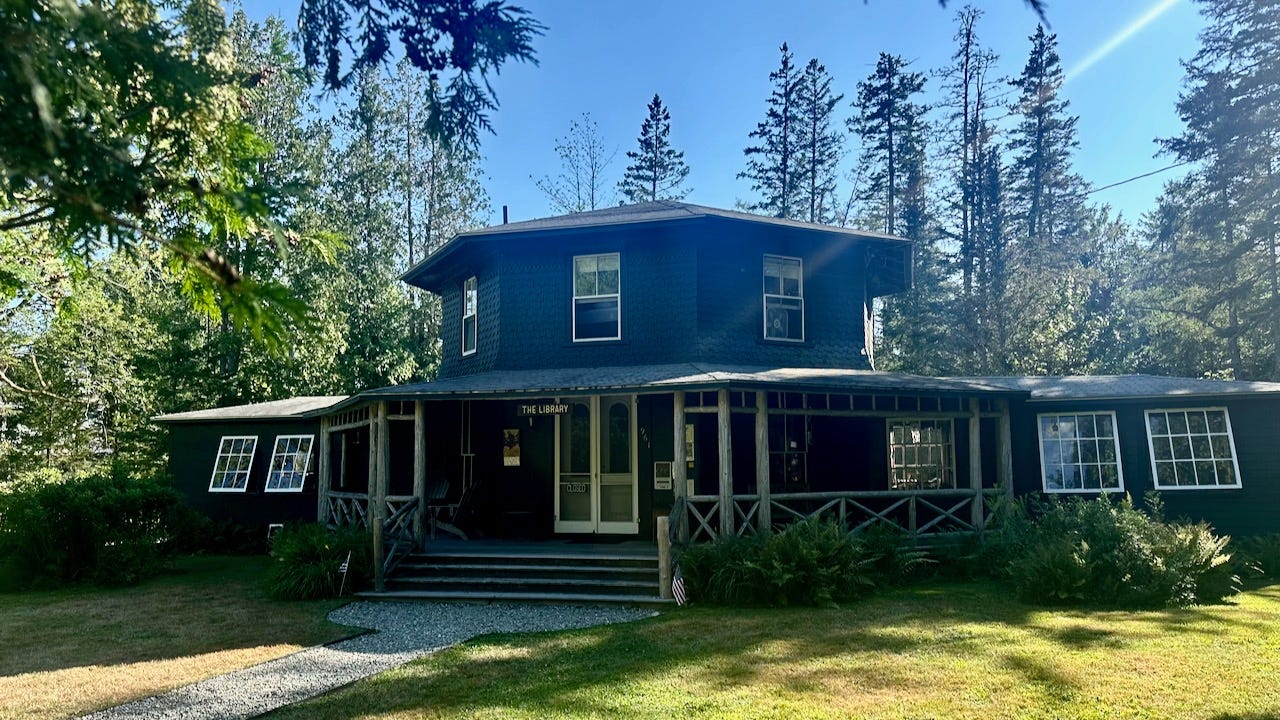
Will Allcott is president of one of them, the Hancock Point Library Association in Hancock Point, Maine, about an hour from Bangor. (Not too far from where Pet Sematary was filmed.) It’s been lending out books for more than a century.
The Hancock Point Library is essentially a private club that anybody can join. Membership costs $20 for individuals and $20 for a family.
“Yeah, that doesn’t make sense,” Will tells me. “But we’re very sensitive to tradition around here.”
Of course, dues aren’t enough to sustain the library, which holds a collection of about 6,600 books. Donations provide additional support, and the library has a small endowment.
The Hancock Point Library is open from July 1 to Labor Day, with 20 hours a week for general book browsing and lots of story times, teas, lectures, and other community events.
About 125 families spend the summer at Hancock Point, and almost all of them join the library.
“In a community library, certainly in ours, the sense of ownership is universal among the patrons,” Will says. “They believe that they are the owners of the library.”
And that’s not just a romantic ideal.
“In Maine, we have a lot of storms, and we have a lot of trees, and frequently they don’t get along,” Will says. “But if a tree falls on our building, it’s not unusual for someone to be there with a chainsaw.”
Many of the library users know each other, which accounts for some quirks one wouldn’t find in a public library. For instance, if a patron wants a book that’s already checked out, they ask who’s got it, and the librarian tells them so they can track it down themselves.
“A week or two later, the book comes back — not by the person who originally took it out, but by somebody else,” Will says.
“You just have to have a little elasticity in the privacy rules in this place, but it’s part of what makes it charming.”
The library also reaches beyond its summer community by providing free membership to parents of students at Hancock Grammar School. Library members volunteer to read with disadvantaged students, too.
Each year, the board hires a school librarian on summer vacation. Above the library there’s an apartment where the librarian can live with their family. “So,” Will says, “they get a family vacation for the time they’re here, as well as being a librarian.”
Recently, the librarian asked for a lock on the door to discourage patrons from walking upstairs at all hours and asking to borrow a book.
It’s a nuisance, to be sure, but also indicative of the community’s proprietary affection. “They don’t just go in and take out books,” Will says. “They go into the library feeling like they’re going into their living room.”
I confess, I’m enchanted by all this Down East charm, but the more I think about association libraries, the more questions I have:
How do they balance the intimacy of a small community with the privacy protections that public librarians have spent decades defending?
Do they strengthen a state’s reading culture, or do they inadvertently weaken support for tax-funded public libraries — particularly in communities that can least afford them?
Does private governance make them more or less vulnerable to book-banning campaigns?
I’m only on the first chapter of this rich subject. I hope those of you involved with libraries will help the rest of us by sharing your thoughts in the comments below.◆
Picture This
More than 50 years ago, during a Sunday dinner, my little brother asked for the pickles, and our grandmother said, “He certainly is a little pickle eater!”
In such moments, family sobriquets are born. And no obnoxious big brother would ever let that one die.
My brother is a successful businessman, a man of wide and undisputed talents, a grandfather, but I’ve also ensured that the Little Pickle Eater remains the perennial recipient of pickle Christmas ornaments, pickle dog toys, pickle stuffed animals, and a drawer full of pickle greeting cards.
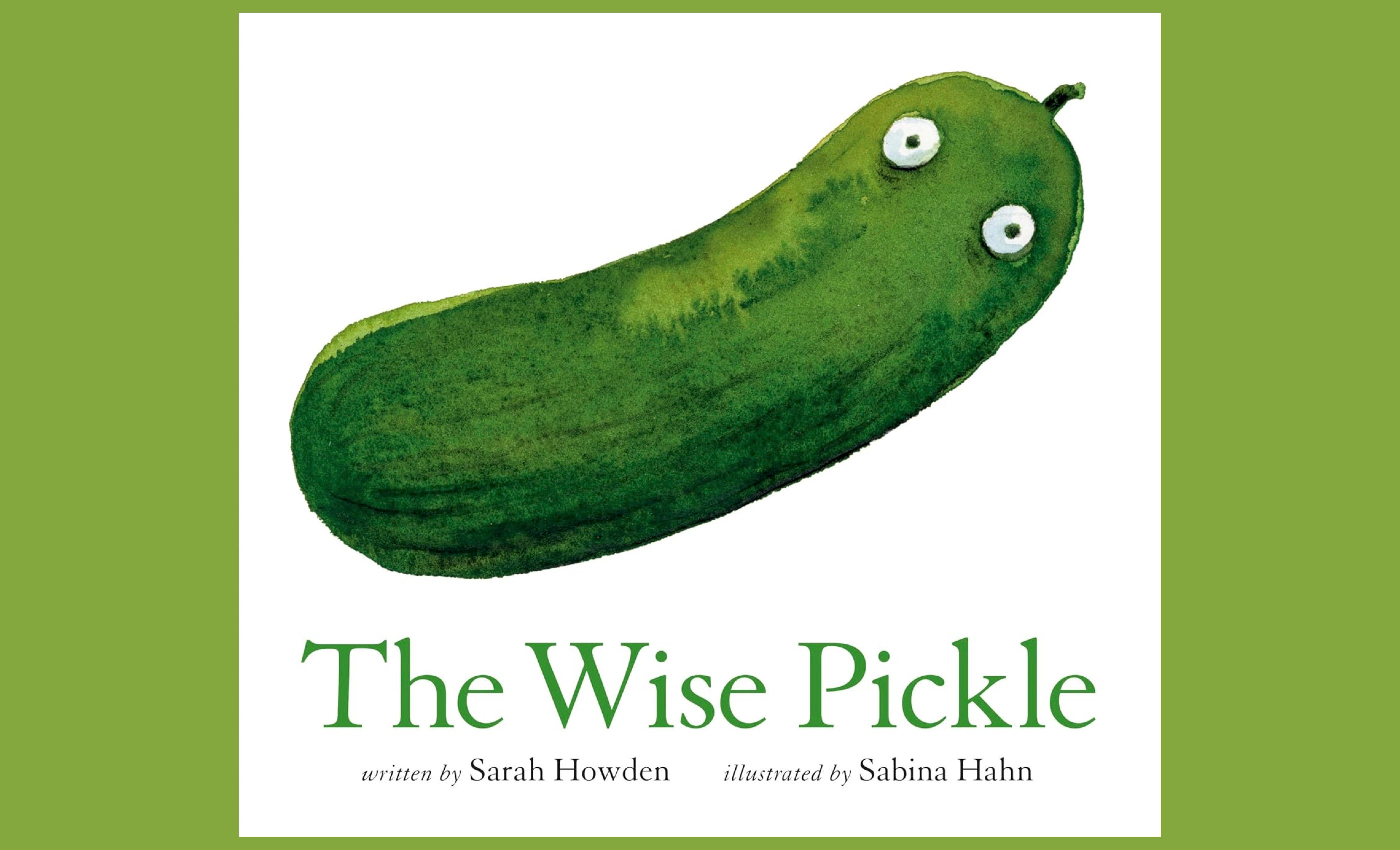
This weekend, for his birthday, he’ll be receiving a copy of a wonderfully bizarre picture book called “The Wise Pickle.”
At the start of this story, written with existential gravity and dead-pan wit by Sarah Howden, a pickle comes to rest in front of a dry cleaner.
“I am a pickle on the side of the road,” it said. “I have lived a lot of life.”
Animals gather and begin asking the pickle questions about its nature, its origin, its purpose.
“I used to think I was meant to be a tasty snack,” the pickle says. “But now I am here, talking with you. Purposes can change.”
Such briny wisdom.
As the pickle withers in the sun and the end approaches, it tells the chipmunk and the mouse that it would like “to be gobbled up by a dog.”
The pickle seems at peace. But that’s just fate gherkin its chain. So much adventure remains.
Sabina Hahn’s illustrations — created with pencil, watercolor and pickle brine — leave plenty of white space and capture the story’s mock solemnity with just the right understated humor.
The little pickle eater in your house will devour this.◆
This Week’s Poem
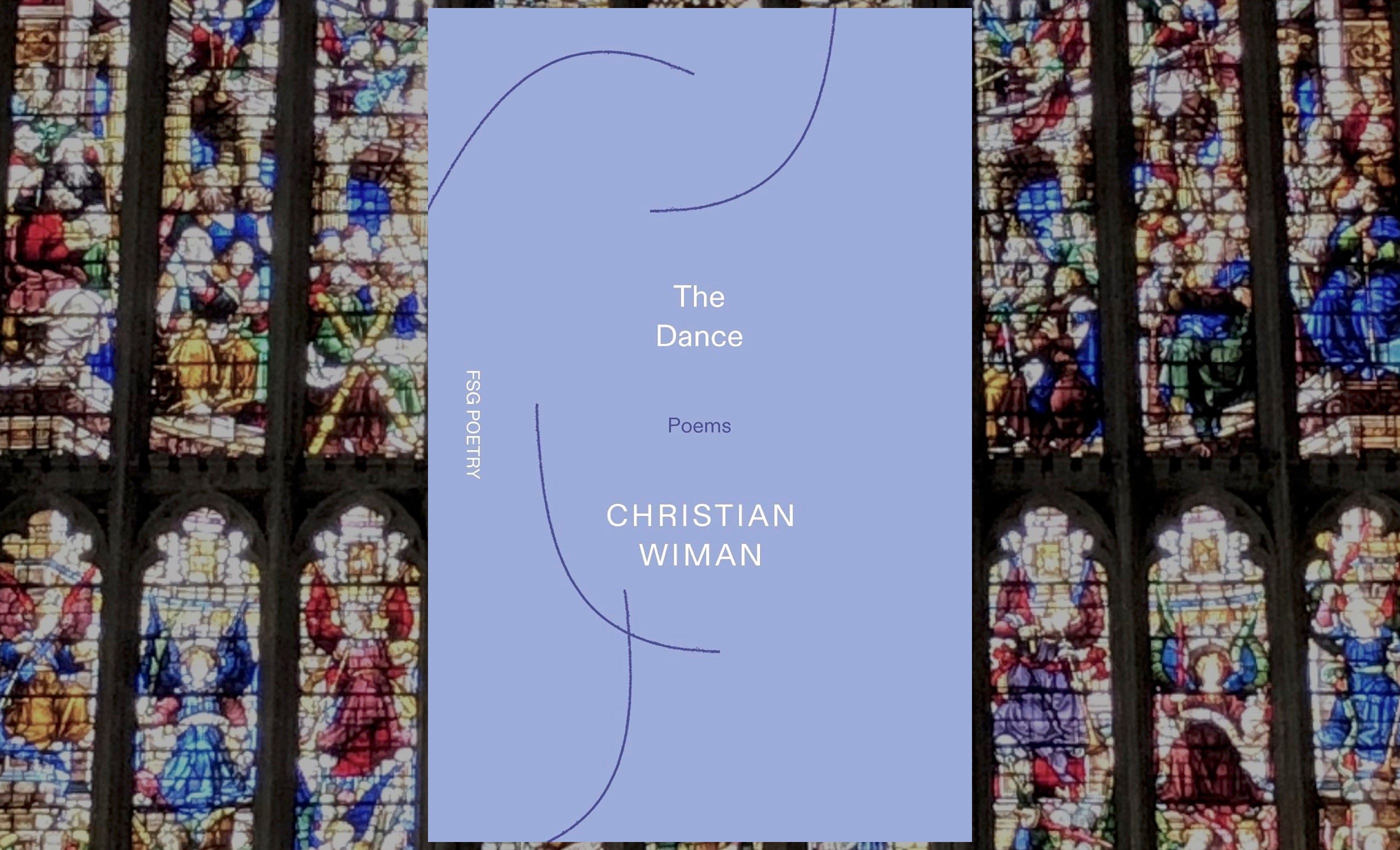
Earlier this year, in an unusually profound interview with Peter Wehner for The New York Times, the poet Christian Wiman said, “Uncertainty is all we have.”
That would seem a paradoxical affirmation from the country’s finest living poet of Christian faith. But uncertainty is fundamental to Wiman’s concept of God. Like George Herbert, he refuses to rest on metaphysical declarations.
Our inability to define existence, he notes, should make us far more cautious about defining God.
“I have a hunger for the truth of the world. I wish I could relax, honestly. But it’s just a fever; it’s been in me forever. Poetry is the way that I’ve come closest to appeasing it.”
Thunder Wonder
Thunder wonder and a dream of being
at the exact and exacting
edge of rain, happy to have myself
so mystically split yet compelled
to step into an utter
one way or another. It must exist,
that elliptical but unmistakable line
where one might stand with single mind
experiencing luck and lack
depending:
relief that rain has finally come,
relief that rain is finally ending.
If I remembered how the dream
resolved, which way I chose or whether
weather itself determined,
if I could chalk it all to metaphor
and separate tenor from vehicle,
dearth from store, it seems
some main confusion in my life
would come clear. In truth, I’m left
with that half-elated, half-depleted
feeling of coming back
to consciousness, bereft
of something I can’t even name, and called
with all my mongrel words to praise
the very same.
Excerpted from “The Dance.” Copyright © 2026 by Christian Wiman. Published by Farrar, Straus and Giroux, 2026. Reprinted with permission of the publisher. All rights reserved.
P.S. Five writers have been named Ruth Lilly and Dorothy Sargent Rosenberg Poetry Fellows: Xochi Quetzali Cartland, Fatima Jafar, Noel Munguia-Moreno, Shaina Phenix, and Tariq Thompson. This $27,000 fellowship, awarded by the Poetry Foundation, recognizes exceptional poets in the U.S. who are between the ages of 21 and 31.◆
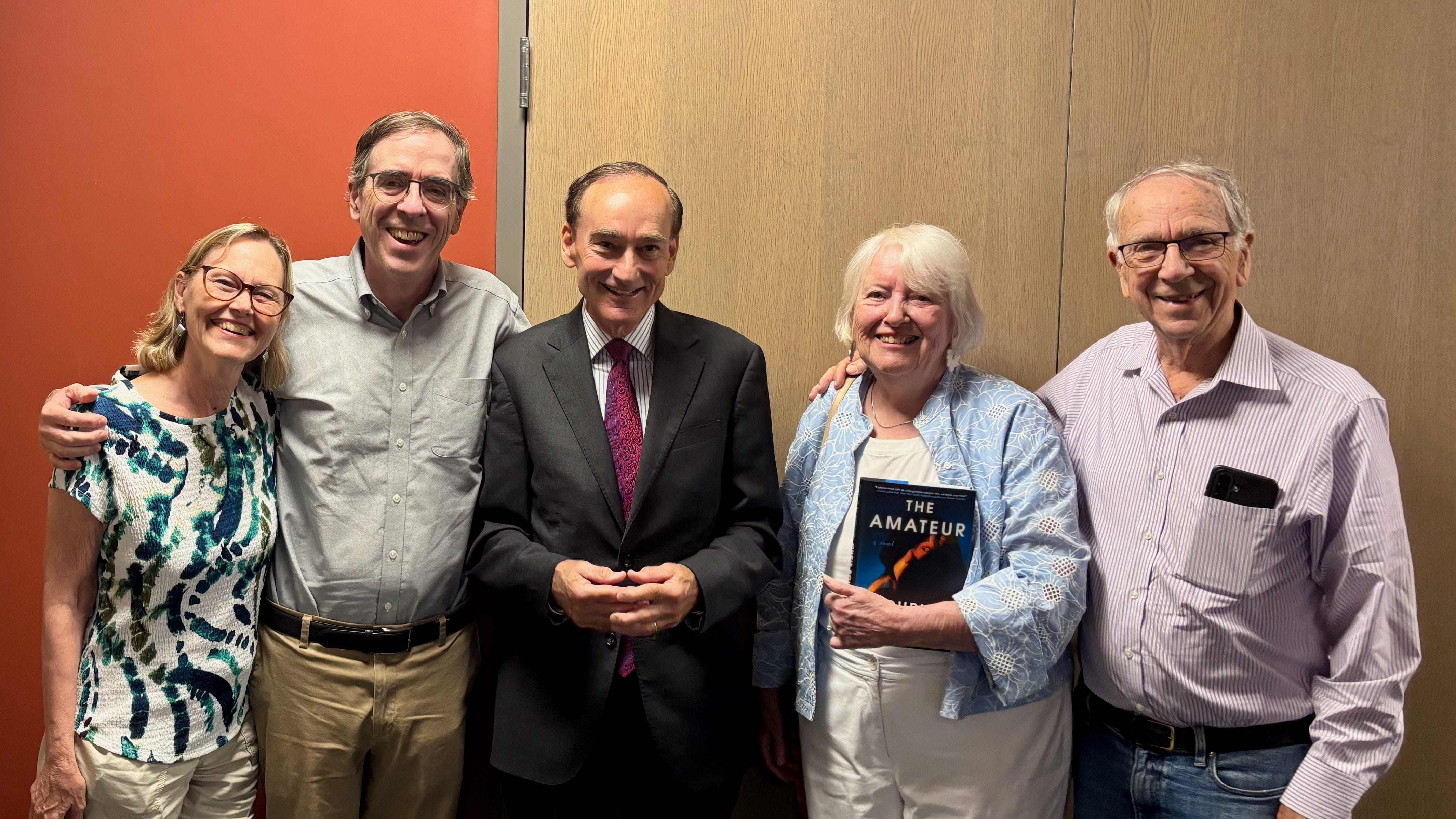
The Writing Life
Chris Bohjalian wrote his new thriller, “The Amateur,” in secret during an astonishing 90-day explosion of productivity. No one knew what he was up to — not his agents, not his editor. Even his wife was left in the dark. He told her, “If I gave you the elevator pitch, you’d think I was mad.”
When he finished, he attached the draft to an email and sent it around with the subject line: “How I spent my summer vacation.”
Monday night — on the eve of the publication of “The Amateur” — Bohjalian spoke to a crowd of enthusiastic fans at an event organized by Gibson’s Bookstore in Concord, N.H.
The story, a blend of suspense and autobiography, is about a novelist remembering when she was a golf prodigy who accidentally killed a high-school caddy with a golf ball.
Bohjalian, once a caddy himself, never killed anyone, but he says that young woman bears an uncanny resemblance to his wild youth.
When readers tell him, “She was completely out of control. She set a door on fire!” he thinks, “Yeah, she did, but so did I.”◆
Clippings
Thanks so much for your kind and encouraging response to my career update, “Six Months After the Fall” (read).
Stephen Colbert and Mitchell Kaplan, founder of Books & Books in Coral Gables, Fla., will receive the Anti-Censorship Award from the Before Columbus Foundation as part of this year’s American Book Awards (full list).
Washington Monthly is reviving Book World and looking for an editor (details).◆
Thank you for reviewing -- and promoting -- what will be a great but sobering read. The genre of science focused on our relationship to the planet is often relegated to stacks subconsciously labeled "enviro-whining." Especially so when it describes something we do or enjoy only to learn of its ripple effects across the ecosystem.
And thank you for your cold plunge into Substack. I grew up trusting journalism delivered by mainstream media outlets. Now, that ground you came from is spongy. We're grateful you are continuing your professional craft in a studio of your own making.
Love having coffee with you and your stack